
County & City Agencies in New Hampshire
Navigating municipal and county government offices in New Hampshire requires understanding the state's traditional town meeting structures, city charters, and county registries. Local town clerks, city departments, and county registers maintain essential property deeds, zoning permits, and vital statistics. Explore our verified directory below to identify municipal offices, county courthouses, and regional public records resources.

Manchester Housing and Redevelopment Authority - Manchester, NH







The Role of County and Municipal Governance in New Hampshire
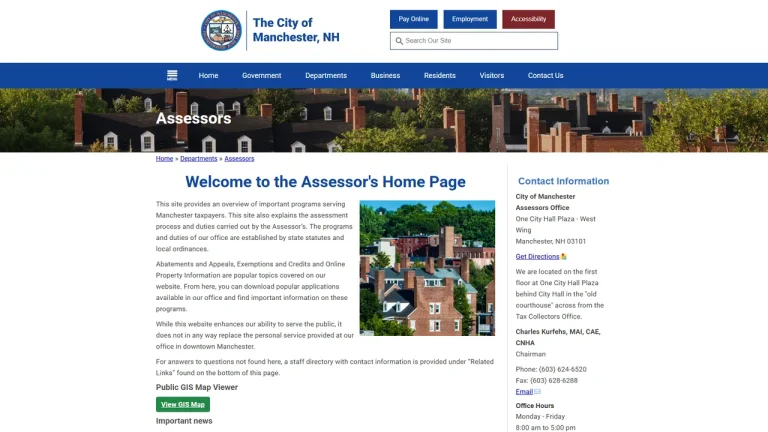
Local government in the State of New Hampshire is defined by a decentralized civic model divided between ten administrative counties and two hundred thirty-four municipal cities and towns. Municipalities serve as the primary contact point for daily public administration, functioning either under traditional Town Meeting and Select Board systems or incorporated city charters with Mayor-Council structures, such as in Manchester, Nashua, Concord, and Dover. Municipal City and Town Clerks oversee vital records, process local motor vehicle permits, issue marriage licenses, and maintain municipal meeting records.
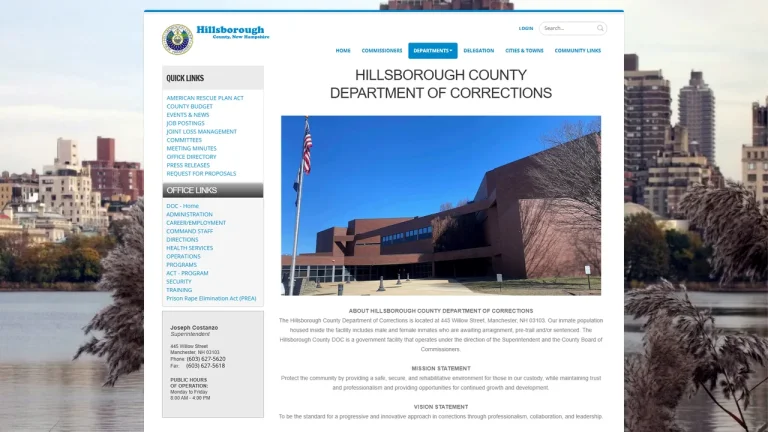
County government provides critical regional infrastructure managed by three elected County Commissioners in each county seat, including centers such as Manchester, Brentwood, Dover, and Keene. County offices oversee county nursing homes, administer county departments of corrections, and support regional law enforcement through the elected County Sheriff's Office. In addition, the County Attorney prosecutes major felony offenses transferred from municipal police departments.
A core county-level legal agency is the County Registry of Deeds, operated by an elected Register of Deeds in each county. The Registry of Deeds is responsible for recording land transfers, mortgages, property attachments, and real property liens. Understanding the operational divide between municipal town halls and county seats ensures public filings, land recordings, and local permits are submitted to the proper desk.
Local Public Services, Document Filings, and Statutory Schedules
| Service / Matter | Required Documents / Prerequisites | Statutory Fee (USD) | Processing Timeline |
|---|---|---|---|
| County Registry of Deeds Recording (Deed or Mortgage) | Original executed document, notary acknowledgment, L-CHIP and county recording fees | $15 first page ($4 each additional page) plus $25 L-CHIP fee | Same-day indexing and electronic verification |
| Municipal Trade Name Registration (Town / City Clerk) | Completed trade name application, business address within municipality | $50 statutory state/municipal registration fee | Immediate in person; 3 to 5 business days by mail |
| Local Building Permit or Zoning Variance Application | Site plans, architectural drawings, property owner verification, application | Variable municipal scale based on construction valuation | 30 days statutory review for Zoning Board of Adjustment |
| Certified Municipal Vital Record (City/Town Clerk) | Valid government-issued photo ID, completed vital record request, eligibility proof | $15 first copy ($10 each additional copy) | Immediate over-the-counter processing |
Critical Legal Deadlines & Statutes in New Hampshire
Municipal and county actions in New Hampshire are tightly regulated by statutory procedural standards. Under N.H. Rev. Stat. Ann. § 478:1, County Registers of Deeds must promptly record and index all deeds, mortgages, conveyances, and title documents presented for filing, maintaining tract and grantor-grantee indexes to establish clear real property notice.
At the municipal level, Town Clerks operate under N.H. Rev. Stat. Ann. § 41:16, maintaining custodial responsibility for town ledgers, vital event registrations, and public notices. In local land use regulation, appeals from administrative municipal zoning decisions are governed by N.H. Rev. Stat. Ann. § 676:5, requiring an aggrieved party to file an appeal with the local Zoning Board of Adjustment (ZBA) within a reasonable time established by municipal ordinance, typically within thirty calendar days of the decision.
Municipal and county bodies must adhere strictly to open government mandates codified in N.H. Rev. Stat. Ann. § 91-A:2. Minutes of all open public meetings must be made available for public inspection within five business days, while minutes of non-public executive sessions must be recorded and publicly disclosed within seventy-two hours unless statutory sealing criteria are met. Furthermore, statutory enforcement powers and civil process duties of County Sheriffs are codified under N.H. Rev. Stat. Ann. § 104:5.
Direct Municipal Processing vs. Retaining Municipal Legal Counsel
Property owners and citizens routinely manage administrative transactions directly with city and town halls without hiring an attorney. Standard tasks include paying local property tax assessments, acquiring certified copies of vital certificates, filing sole proprietor trade names, licensing pets, and attending public town meetings to vote on warrant articles. These transactions are standard civic procedures managed directly with town or city staff.
Conversely, retaining an attorney experienced in New Hampshire municipal and land use law is essential when disputes arise over land development, zoning, or municipal enforcement. Legal counsel is critical when presenting complex variance applications before a local Zoning Board of Adjustment (ZBA) or Planning Board, contesting municipal property tax assessments via a formal abatement petition under RSA 76:16, or appealing planning board decisions to the New Hampshire Superior Court under RSA 677:15. An attorney ensures procedural records are preserved and municipal actions comply with statutory authority.
Local Government Scams, Solicitations, and Public Alerts
- Beware of deceptive direct-mail notices charging $80 to $120 to provide a "Certified Copy of Your Recorded Deed," which can be obtained directly from your local County Registry of Deeds for statutory copy fees.
- Do not submit payments to third-party websites claiming to expedite municipal building permits or land-use applications, as local applications must be submitted directly to municipal building departments.
- Disregard unsolicited telephone calls claiming to be from the County Sheriff's Office demanding payment for missed jury service or outstanding municipal warrants via wire transfer or cryptocurrency.
- Confirm that any trade name registration or local assumed business name filing is executed through the Town Clerk or the official NH Secretary of State portal rather than unregulated intermediaries.
Frequently Asked Questions
What is the difference between town and county government in New Hampshire?
Town and city governments handle local public services including police, fire protection, municipal road maintenance, local zoning, and vital statistics. County governments manage regional services, including the county jail, county nursing home, sheriff department operations, and the county Registry of Deeds.
How do I record a deed or real estate lien in New Hampshire?
Real estate instruments must be recorded with the County Registry of Deeds where the property is geographically situated. The instrument must be an original with notarized grantor signatures, conform to recording formatting standards, and include required recording fees and the Land and Community Heritage Investment Program (L-CHIP) surcharge.
What is the deadline to appeal a local zoning board decision in New Hampshire?
An appeal of a building inspector or administrative zoning decision must be filed with the local Zoning Board of Adjustment within the timeframe set by local ordinance (typically thirty days). If the ZBA denies the request, a motion for rehearing must be filed within thirty calendar days before appealing to the Superior Court.
Can I register a local business trade name with my town clerk?
Trade name registrations for sole proprietorships and general partnerships can be filed through the local municipal clerk or directly with the New Hampshire Department of State Corporation Division, establishing legal public notice of business operations under an assumed name.
How can I access municipal meeting minutes under New Hampshire law?
Under the New Hampshire Right-to-Know Law (RSA 91-A), minutes of all public board meetings must be made available for inspection within five business days of the meeting at the Town Hall, City Hall, or through the municipality's official website.