
Law Enforcement & Corrections in New Hampshire
Law enforcement and correctional facilities in New Hampshire uphold statutory public safety, manage county and state detention centers, and maintain regional criminal dockets. Navigating custodial arrests, bail commissioner hearings, or inmate visitation requires strict adherence to state procedural standards. Browse our directory below to locate New Hampshire police departments, county houses of correction, and state correctional facilities.


NH Division of Emergency Services and Communications (E-911) - Concord, NH


U.S. Marshals Service - District of New Hampshire - Concord, NH



New Hampshire Army National Guard - Recruiting - Concord, NH

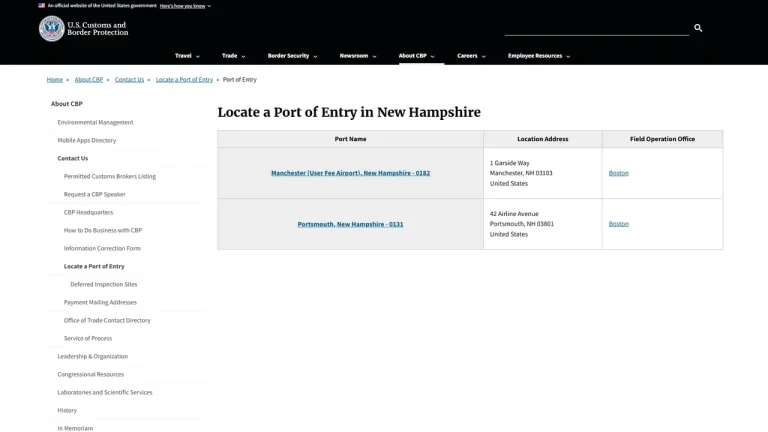
U.S. Customs and Border Protection - Manchester Port of Entry - Manchester, NH
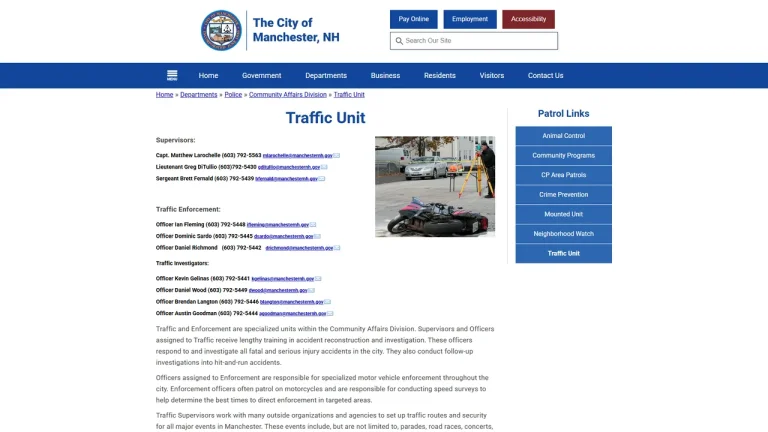


The Jurisdictional Scope of New Hampshire Law Enforcement and Penal Institutions
Law enforcement and corrections in the State of New Hampshire are structured across state, county, and municipal authorities. Statewide highway interdiction, forensic crime laboratory analysis, and major criminal investigations are directed by the New Hampshire State Police (NHSP), a division of the Department of Safety headquartered in Concord. The State Police operates regional troop headquarters-including Troop A in Epping, Troop B in Bedford, Troop C in Keene, Troop D in Concord, Troop E in Tamworth, and Troop F in Twin Mountain-exercising statewide peacekeeper jurisdiction pursuant to N.H. Rev. Stat. Ann. § 106-B:12.
At the county level, elected County Sheriffs oversee law enforcement operations in all ten counties pursuant to N.H. Rev. Stat. Ann. § 104:5. Major sheriff offices-such as those in Hillsborough County (Goffstown), Rockingham County (Brentwood), Merrimack County (Boscawen), and Strafford County (Dover)-maintain primary responsibility for prisoner transportation, security within Circuit and Superior Courtrooms, execution of civil process, and inter-agency dispatch support. Incorporated municipalities, including Manchester, Nashua, Concord, Dover, and Portsmouth, maintain dedicated municipal police departments enforcing municipal ordinances and state criminal statutes within city boundaries.
The correctional landscape is divided between county detention centers and the state prison system. Pretrial detainees and misdemeanor offenders serving sentences under twelve months are housed in county Houses of Correction managed by county corrections superintendents. Long-term felony offenders sentenced to more than one year are committed to the custody of the New Hampshire Department of Corrections (NHDOC) in Concord, which operates the New Hampshire State Prison for Men in Concord, the New Hampshire Correctional Facility for Women in Concord, and the Northern New Hampshire Correctional Facility in Berlin.
Law Enforcement Services, Inmate Procedures, and Statutory Costs
| Service / Matter | Required Documents / Prerequisites | Statutory Fee (USD) | Processing Timeline |
|---|---|---|---|
| State Police Criminal History Check | Criminal History Record Request Form, notarized signature, valid government photo ID | $25 statutory central repository fee | 5 to 10 business days through NHSP Central Repository |
| Police Traffic Collision Report (DSMV 156) | Driver identification, crash date, investigating department report number | $15 statutory record retrieval fee | 7 to 14 business days from official investigation completion |
| Bail Commissioner Administrative Release | Bail commissioner determination order, verified ID, court appearance promise | $40 statutory bail commissioner fee | 1 to 4 hours following completion of booking and warrant checks |
| State Prison Inmate Visitation Approval | Completed NHDOC visiting application, criminal background check, photo ID | $0 (Statutorily free administrative application) | 14 to 21 business days for department security review |
Critical Legal Deadlines & Statutes in New Hampshire
Interactions with New Hampshire law enforcement and correctional institutions require compliance with strict constitutional and statutory timeframes. When an individual is arrested without a judicial warrant pursuant to N.H. Rev. Stat. Ann. § 594:10, state procedural rules codified in N.H. Rev. Stat. Ann. § 594:20-a mandate that the detainee be brought before a Circuit Court District Division judge for formal arraignment within 24 hours of arrest, excluding weekends and legal holidays.
Pretrial release and bail considerations are strictly governed by N.H. Rev. Stat. Ann. § 597:2, which presumes release on personal recognizance unless the court or bail commissioner determines that release will not assure appearance or will endanger public safety. If preventive detention or unaffordable cash bail is imposed, N.H. Rev. Stat. Ann. § 597:6-e guarantees the accused the right to petition the Superior Court immediately for de novo review of the bail determination. In traffic collisions, N.H. Rev. Stat. Ann. § 264:25 requires any driver involved in a crash causing injury, death, or total property damage exceeding $1,000 to submit a written Operator Accident Report within 15 calendar days.
Direct Agency Access vs. Legal Counsel
Citizens can handle routine administrative interactions with New Hampshire police and correctional facilities without legal representation. Individuals may independently request copies of completed motor vehicle crash reports, apply for inmate visitation privileges through the Department of Corrections portal, deposit funds into inmate commissary accounts, and pay standard statutory fees to bail commissioners for after-hours personal recognizance releases.
However, when an individual faces custodial interrogation, preventive detention hearings, or formal criminal indictment in the Superior Court, representation by a qualified criminal defense attorney is indispensable. Unrepresented statements made to investigating police detectives frequently compromise constitutional defenses. An attorney licensed by the New Hampshire Bar Association protects Fifth and Sixth Amendment rights, cross-examines police witnesses, challenges warrantless searches, files formal motions for bail reduction under N.H. Rev. Stat. Ann. § 597:6-e, and navigates felony trials.
Procedural Warnings & Public Scams
- Beware of telephone imposters claiming to be New Hampshire State Troopers or County Sheriff deputies demanding bail money, missed jury duty fees, or warrant clearance payments via digital gift cards or wire transfers; legitimate law enforcement officers never demand payment over the phone.
- Never attend an investigatory police interview without legal counsel present; anything stated during an informal detective conference can be used to establish probable cause for an arrest warrant under N.H. Rev. Stat. Ann. § 594:10.
- Strictly adhere to the 15-day accident reporting deadline under N.H. Rev. Stat. Ann. § 264:25, as failure to file the required form can result in the administrative suspension of your driver's license by the Division of Motor Vehicles.
- Verify that any individual offering after-hours release services is an officially appointed New Hampshire Bail Commissioner bound by statutory fee caps under N.H. Rev. Stat. Ann. § 597:2.
Frequently Asked Questions
What is the statutory deadline for bringing an arrested individual to arraignment in New Hampshire?
Under N.H. Rev. Stat. Ann. § 594:20-a, an individual arrested without a warrant must be brought before a Circuit Court judge for formal arraignment within 24 hours, excluding weekends and official legal holidays.
What is the role of a New Hampshire Bail Commissioner?
Appointed by the court under N.H. Rev. Stat. Ann. § 597:2, Bail Commissioners conduct initial bail evaluations outside standard court hours to set personal recognizance conditions or cash bail for a statutory $40 administrative fee.
How do county houses of correction differ from New Hampshire state prisons?
County Houses of Correction house pretrial detainees and offenders sentenced to terms of twelve months or less, whereas the New Hampshire Department of Corrections manages state facilities for individuals serving felony sentences exceeding one year.
When is an operator required to report a motor vehicle collision in New Hampshire?
Pursuant to N.H. Rev. Stat. Ann. § 264:25, any driver involved in a collision resulting in injury, death, or total combined property damage exceeding $1,000 must file a formal written report within 15 calendar days.
How can I obtain a certified criminal history record check in New Hampshire?
Certified background checks are processed through the New Hampshire State Police Central Repository of Criminal Records in Concord upon submission of a signed, notarized request form and payment of the statutory fee.