
Government Agencies in New Jersey
Navigate executive departments, state commissions, and regulatory agencies across New Jersey. Access public records, administrative filings, and official desks directly. Headquartered in Trenton with regional service centers in Newark, Camden, and Atlantic City, state agencies oversee taxation, consumer protection, and professional licensing. Explore our verified directory below to locate agency contacts, public records custodians, and regulatory divisions.


Jersey City Police Department Firearms Licensing Unit - Jersey City, NJ



Social Security Administration - Trenton Field Office




Jersey City Parking Permit Office (The Hub) - Jersey City, NJ


Executive Authority & State Regulatory Jurisdiction in New Jersey
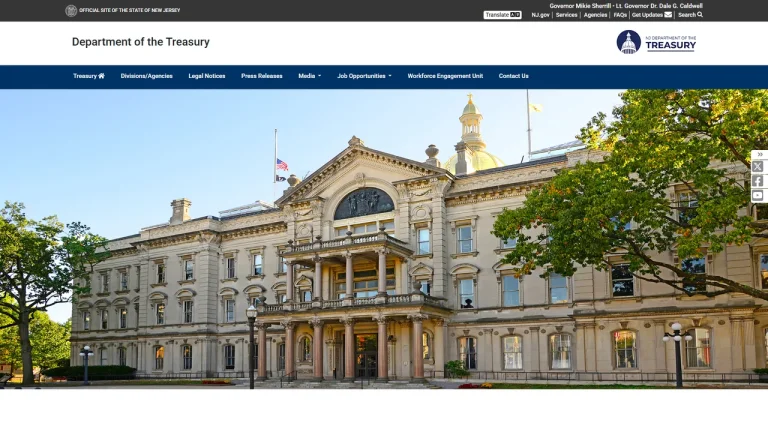
Executive governance in New Jersey is established under N.J. Const. art. V, § 4, which organizes state government into principal executive departments centered in the state capital of Trenton. Key agencies include the Department of the Treasury, Department of Law & Public Safety, Department of Environmental Protection (NJDEP), Department of Labor and Workforce Development, and Department of Banking and Insurance (DOBI).
Regional offices situated across major metropolitan centers such as Newark, Jersey City, Paterson, Camden, and New Brunswick provide direct public access to state services, administrative hearings, and regulatory enforcement. In addition, professional licensing boards operating within the Division of Consumer Affairs in Newark supervise tens of thousands of licensed trades, health professionals, and commercial entities.
Contested administrative decisions from state agencies are referred for independent evidentiary hearings before Administrative Law Judges at the New Jersey Office of Administrative Law (OAL), established pursuant to N.J. Stat. Ann. § 52:14F-1. Public transparency across all executive bodies is codified by the New Jersey Open Public Records Act (OPRA) under N.J. Stat. Ann. § 47:1A-1.
New Jersey State Agency Services & Administrative Timelines
| Service / Matter | Required Documents / Prerequisites | Statutory Fee (USD) | Processing Timeline |
|---|---|---|---|
| Open Public Records Act (OPRA) Request | Formal OPRA Request Form, Specific Custodian Identification | $0.05/page letter size, $0.07/page legal size per N.J.S.A. 47:1A-5 | Response required within 7 business days |
| Division of Consumer Affairs License Application | Board Application, Academic Transcripts, Criminal Background Check | $50 - $250 dependent on professional board | 4 to 8 weeks for board review |
| State Tax Clearance Certificate Request | Form A-5088-TC, Proof of Corporate Standing, Tax Filing Records | $25 statutory application fee (waived in certain filings) | 10 to 15 business days |
| Office of Administrative Law (OAL) Hearing Notice | Transmittal from Regulating Agency, Initial Denial Order | $0 statutory docket fee for transmitted state appeals | Initial hearing notice within 30 to 45 days |
Critical Legal Deadlines & Statutes in New Jersey
Public engagement with New Jersey government agencies is strictly governed by statutory deadlines. Under the Open Public Records Act, N.J. Stat. Ann. § 47:1A-5, a designated records custodian must grant access, assert a lawful statutory exemption, or provide written notice of an extension within seven business days of receiving an official request.
When contesting an administrative penalty or regulatory decision rendered by a principal department, timeframes for appeal are narrow. Under N.J. Ct. R. 2:4-1, an appeal from a final state administrative agency decision to the Appellate Division of the Superior Court must be filed within 45 days from the date of service of the final decision or notice of the action.
Furthermore, under the New Jersey Tort Claims Act, codified at N.J. Stat. Ann. § 59:8-8, a claimant asserting personal injury or property damage against a state agency must file a formal Notice of Tort Claim with the State within 90 days of the accrual of the cause of action, or the claim is forever barred.
Direct Agency Access vs. Retaining Legal Counsel
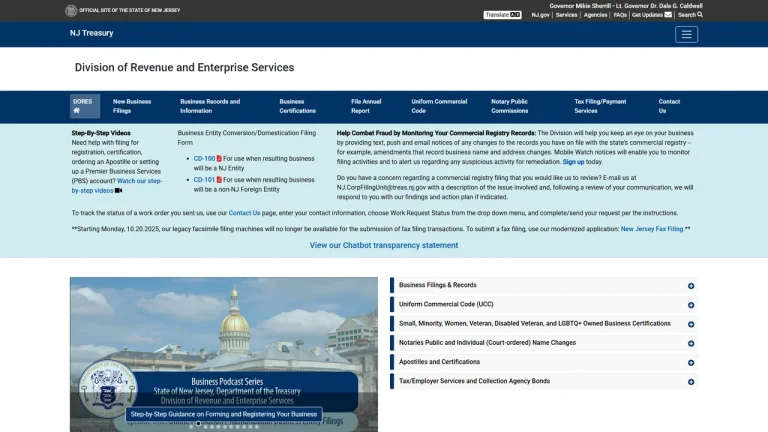
Citizens routinely interact with New Jersey state agencies directly for routine matters without retaining legal counsel. Filing standard OPRA requests, renewing professional credentials through the Division of Consumer Affairs portal, checking corporate entity status via the Division of Revenue and Enterprise Services (DORES), or submitting workplace claims to the Department of Labor are designed for self-directed administrative access.
However, when administrative proceedings become adversarial, retaining an attorney admitted to the New Jersey State Bar is critical. Defending professional license disciplinary charges before a state licensing board, participating in contested plenary evidentiary hearings at the Office of Administrative Law in Newark, Trenton, or Atlantic City, or appealing state tax assessments before the New Jersey Tax Court requires formal statutory briefing, direct and cross-examination of witnesses, and compliance with the New Jersey Rules of Evidence.
Common Red Flags & Deceptive State Agency Schemes
- Deceptive Annual Corporate Report Filings: Be alert to misleading mailings from non-governmental entities charging $125 to $175 for 'Annual Minutes' or 'Business Record Disclosures'; legitimate corporate annual reports are submitted directly to the New Jersey Division of Revenue and Enterprise Services (DORES).
- Phishing Schemes Targeting Regulated Professionals: Avoid email or phone solicitations claiming your New Jersey medical, nursing, or contractor license has been suspended and demanding payment via prepaid debit card or cryptocurrency.
- Third-Party OPRA Brokerage Markups: Steer clear of commercial services that charge recurring subscription fees to submit public records requests, as OPRA forms are free and processed directly by agency records custodians under statutory copying rates.
- Unregistered Out-of-State Document Preparers: Verify that any legal representative handling formal administrative filings is actively licensed in good standing with the New Jersey Board of Bar Examiners and the Supreme Court of New Jersey.
Frequently Asked Questions
Where are the central headquarters for New Jersey state agencies?
Under N.J. Const. art. V, § 4, principal executive departments in New Jersey maintain their primary administrative headquarters in the state capital of Trenton, with regional service offices across the state.
How quickly must a New Jersey government agency respond to an OPRA request?
Pursuant to N.J. Stat. Ann. § 47:1A-5, a public agency records custodian must fulfill, deny, or provide written notice of a necessary extension within seven business days of receiving a records request.
What is the role of the New Jersey Office of Administrative Law (OAL)?
The OAL is an independent state agency established under N.J. Stat. Ann. § 52:14F-1 that assigns Administrative Law Judges to conduct impartial trial-style hearings in contested disputes involving state executive agencies.
How do I appeal a final decision made by a New Jersey state agency?
Under N.J. Ct. R. 2:2-3 and N.J. Ct. R. 2:4-1, appeals from final decisions of state administrative departments must be filed with the Appellate Division of the Superior Court of New Jersey within 45 days.
What is the deadline for filing a tort claim against a New Jersey state department?
Under N.J. Stat. Ann. § 59:8-8, you must file a formal Notice of Claim with the relevant public entity within 90 days of the injury or incident before initiating a lawsuit.