
Public Records & Filing Offices in New Jersey
Access official public records, land recordings, and corporate filings across New Jersey. Locate county clerks, registers of deeds, and state registries directly. From filing real estate deeds and probating wills in county offices to searching state business registries in Trenton, public record laws safeguard property rights. Explore our verified statewide directory below to connect with local filing offices, county recording desks, and vital archives.

Hudson County Superior Court - Finance Division (Violations) - Jersey City, NJ




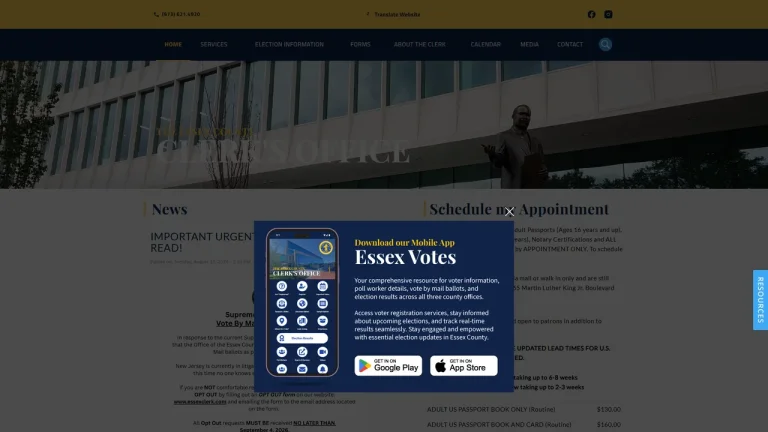

Jersey City Free Public Library: New Jersey Room - Jersey City, NJ



Official Public Records Infrastructure & Recording Desks in New Jersey
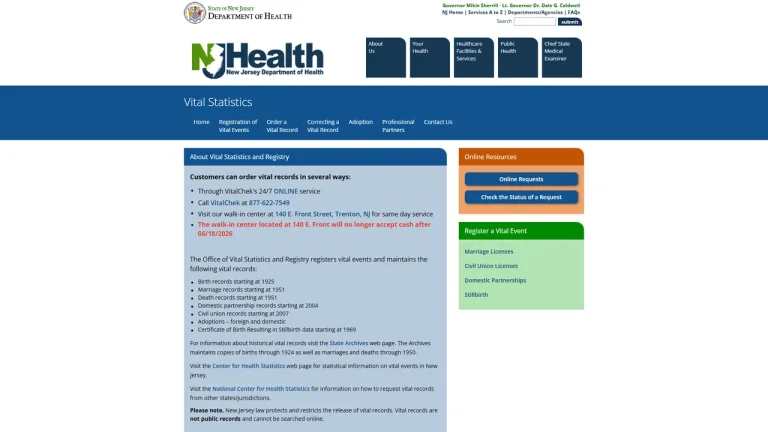
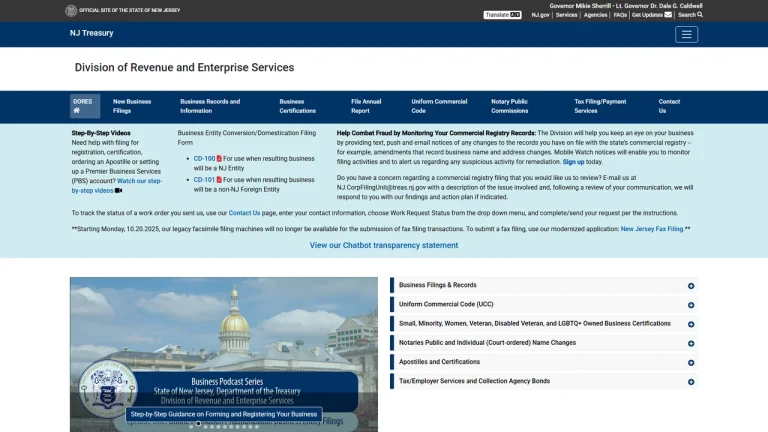
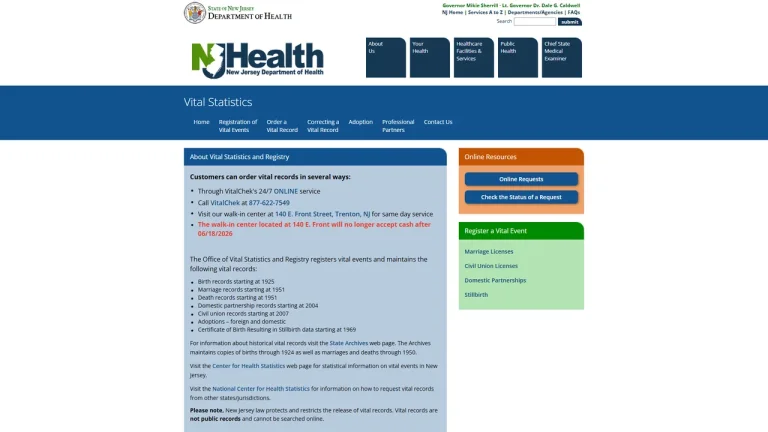
Public record administration in New Jersey is partitioned across state departments in Trenton and constitutional county officers across the state's twenty-one counties. At the state level, the Division of Revenue and Enterprise Services (DORES) maintains corporate entity registrations, Uniform Commercial Code (UCC) financing statements, and trade name filings, while the Department of Health oversees vital statistics.
Real property instruments-including deeds, mortgages, easements, and tax liens-are recorded at the county level pursuant to N.J. Stat. Ann. § 46:26A-1. These records are administered either by the elected County Clerk or, in specialized counties such as Camden, Essex, Hudson, and Union, by an elected Register of Deeds and Mortgages.
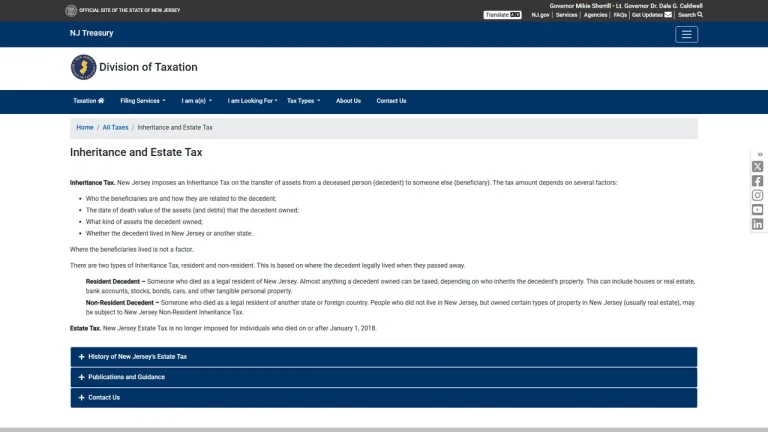
Additionally, estate administration, decedent probate, and appointments of executors are overseen by the County Surrogate pursuant to N.J. Const. art. VII, § 2, para. 2 and N.J. Stat. Ann. § 2B:14-1. Judicial filings for the Law and Chancery Divisions are maintained electronically through the Clerk of the Superior Court in Trenton via the eCourts and JEDS platforms.
New Jersey Public Record Filing Fees & Processing Benchmarks
| Service / Matter | Required Documents / Prerequisites | Statutory Fee (USD) | Processing Timeline |
|---|---|---|---|
| Recording Real Property Deed | Executed Deed, Notary Acknowledgment, NJ Recording Summary Sheet | $40 first page + $10 each additional page (plus Realty Transfer Fee per N.J.S.A. 46:15-7) | 1 to 3 business days |
| County Surrogate Will Probate | Original Will, Certified Death Certificate, List of Next of Kin | $100 - $200 average statutory fee (based on page count per N.J.S.A. 22A:2-30) | Letters Testamentary issued after 10-day statutory waiting period |
| State Business Entity Formation (LLC/Corp) | Public Records Filing Form, Registered Agent, Registered Office | $125 statutory filing fee (DORES) | Immediate online; 3 to 5 business days by mail |
| Certified Superior Court Judgment Search | Judgment Docket Number, Written Request, Proof of Standing | $10 statutory certification fee + search fee | 5 to 10 business days |
Critical Legal Deadlines & Statutes in New Jersey
Real estate recording and probate proceedings in New Jersey are subject to rigid statutory timetables. Under the New Jersey Recording Act, N.J. Stat. Ann. § 46:26A-12, New Jersey operates as a race-notice jurisdiction, meaning an unrecorded deed or mortgage is void against a subsequent bona fide purchaser or encumbrancer for valuable consideration without notice whose deed is recorded first.
In estate administration, the probate of a last will and testament cannot occur immediately upon death. Under N.J. Stat. Ann. § 3B:3-17 and New Jersey Court Rule 4:80-1, no will may be admitted to probate by the County Surrogate until after the expiration of 10 full days following the decedent's death.
Construction contractors and suppliers asserting lien claims must observe strict statutory filing periods under the New Jersey Construction Lien Law. Pursuant to N.J. Stat. Ann. § 2A:44A-6, a construction lien against a commercial property must be filed with the County Clerk within 90 days following the date the last work or materials were provided.
Direct Public Access vs. Retaining Legal Counsel
Members of the public can independently complete standard public record transactions without legal representation. Registering a single-member LLC through DORES, submitting an uncontested will for probate at the County Surrogate's office, recording a standard deed cancellation, or requesting certified copies of historical land records at the County Clerk's desk can be handled directly.
However, when title defects arise or probate becomes contested, retaining an attorney licensed by the New Jersey State Bar is critical. For instance, if a title search reveals an unresolved cloud, missing mortgage satisfaction, or boundary encroachment, an attorney must file a quiet title complaint in the Superior Court of New Jersey, Chancery Division under N.J. Stat. Ann. § 2A:62-1. Furthermore, contested probate matters or caveat filings in the Surrogate's Court require formal litigation in the Superior Court, Probate Part, where corporate executors or complex estates must be represented by legal counsel.
Common Red Flags & Deceptive Public Record Schemes
- Predatory Deed Copy Solicitations: Beware of official-looking letters sent to recent homebuyers charging $85 to $120 for a copy of their deed; certified copies can be obtained directly from your County Clerk or Register of Deeds for approximately $10 to $15.
- Deed Theft & Unauthorized Recording Scams: Monitor your property records regularly; fraudulent recording of quitclaim deeds ('wild deeds') can cloud ownership, necessitating quiet title litigation in the Chancery Division to restore clear title.
- Misleading UCC Filing Services: Disregard aggressive notices from private companies demanding inflated fees to prepare UCC-1 financing statements or file corporate annual reports that can be completed directly through the New Jersey DORES portal.
- Incomplete Recording Summary Sheets: Submitting deeds or mortgages without the mandatory New Jersey recording cover sheet or accurate tax block and lot identifiers results in immediate document rejection by county recording officers.
Frequently Asked Questions
Where do I record a deed or mortgage in New Jersey?
Deeds and mortgages are recorded with the County Clerk in seventeen New Jersey counties, or with the County Register of Deeds and Mortgages in Camden, Essex, Hudson, and Union counties pursuant to N.J. Stat. Ann. § 46:26A-1.
How soon after death can a will be probated in New Jersey?
Under N.J. Stat. Ann. § 3B:3-17, a will cannot be formally probated by the County Surrogate until 10 full days have elapsed following the date of the decedent's death.
What is the difference between a County Clerk and a Register of Deeds in New Jersey?
In most New Jersey counties, the County Clerk manages all land recordings, elections, and civic filings. However, in Camden, Essex, Hudson, and Union counties, land recording duties are delegated to an elected Register of Deeds.
What is the New Jersey Realty Transfer Fee (RTF)?
The Realty Transfer Fee is a statutory state tax imposed under N.J. Stat. Ann. § 46:15-7 on the recording of deeds transferring real property, calculated based on the sales consideration.
What is the statutory filing deadline for a New Jersey construction lien?
Pursuant to N.J. Stat. Ann. § 2A:44A-6, a commercial construction lien must be filed with the County Clerk within 90 days after the final date of providing labor or materials.