
State & Local Courts in Philadelphia
Access Philadelphia state and local courts within the First Judicial District, including the Court of Common Pleas and Philadelphia Municipal Court branches. Navigating local courtrooms across City Hall, the Stout Center for Criminal Justice, and Arch Street requires precise statutory compliance. Review our comprehensive judicial directory below to find court divisions, filing requirements, and official contact details across Philadelphia.
Philadelphia Office of the Clerk of Quarter Sessions - Philadelphia, PA
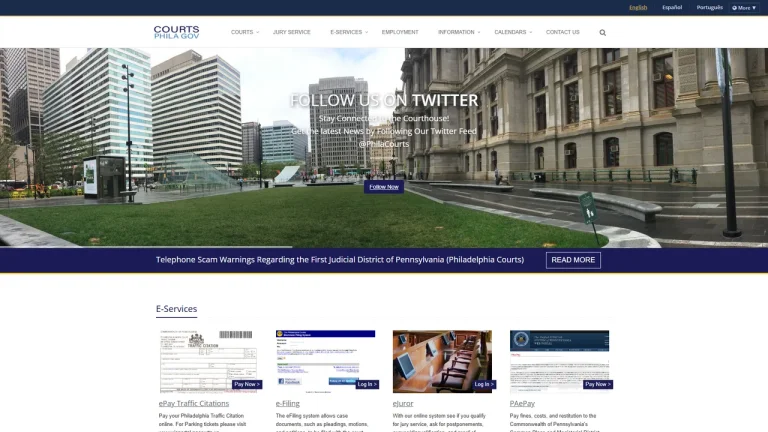
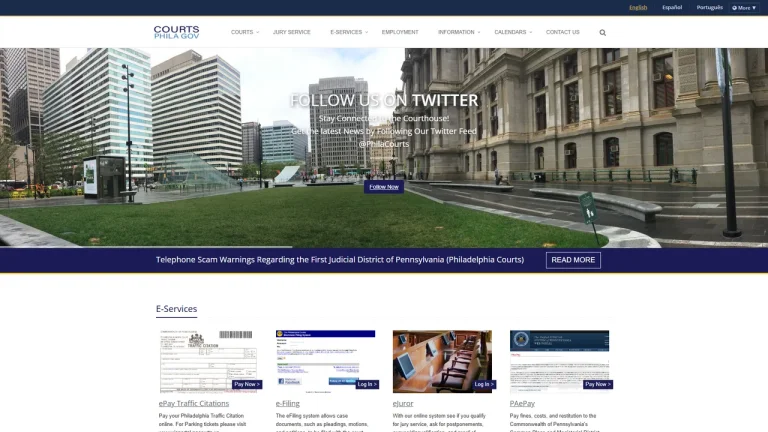

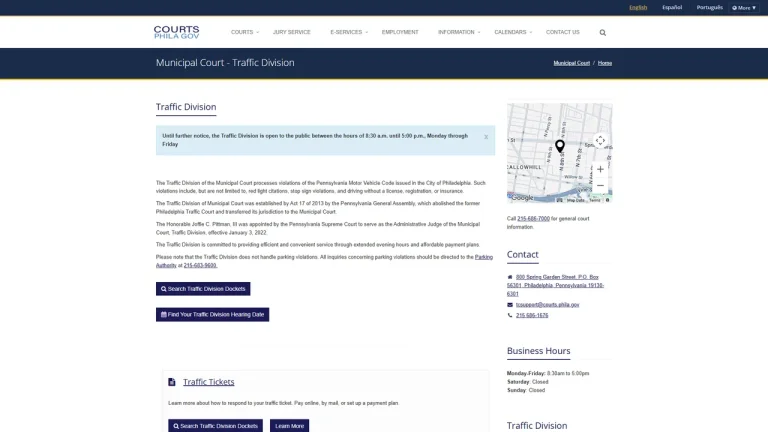
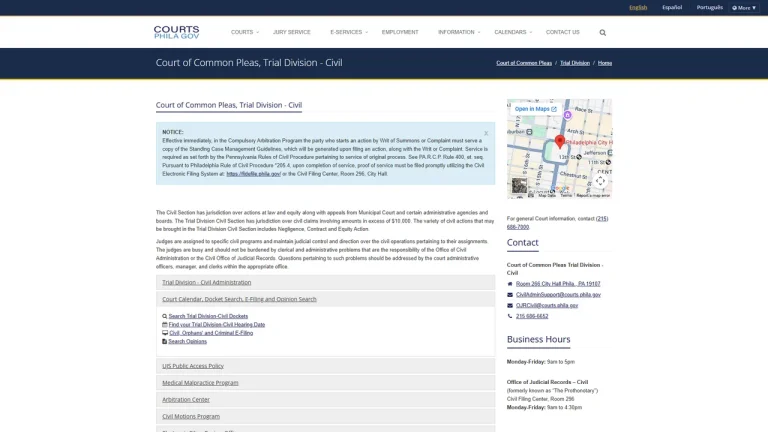
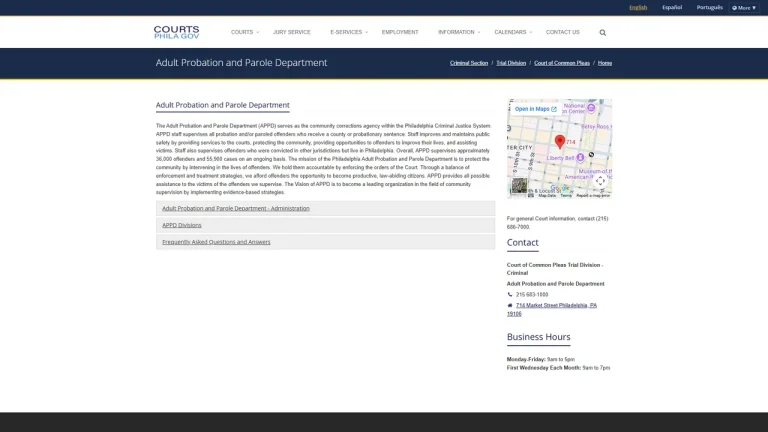
Court-Common Pleas Arbitration - Philadelphia, PA
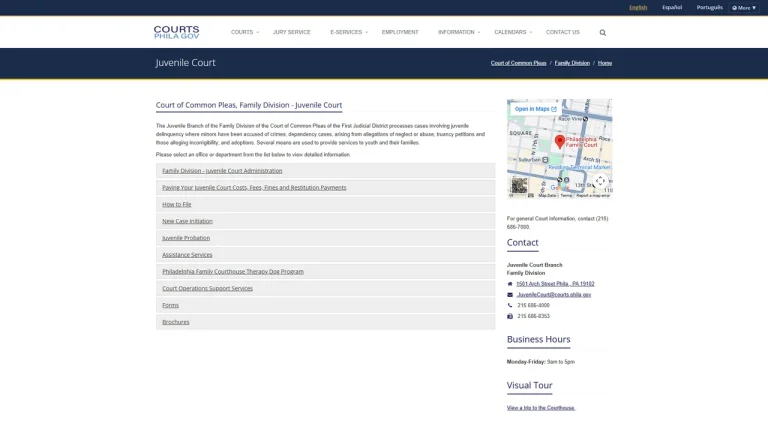
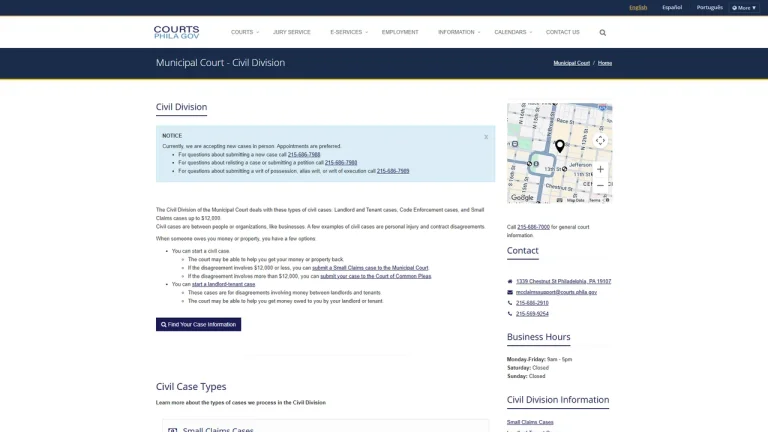
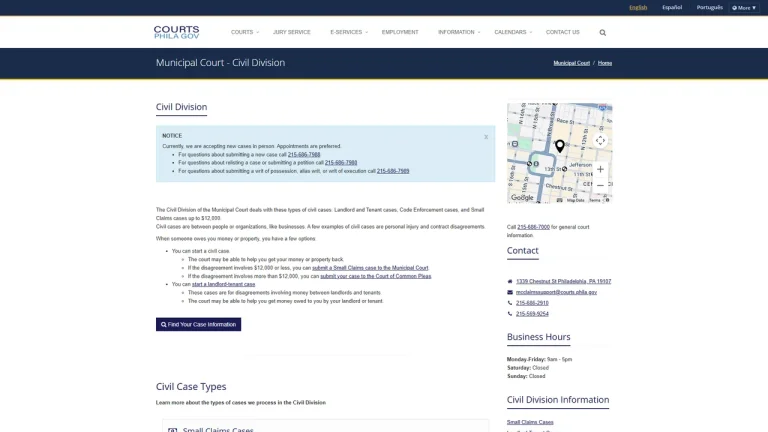
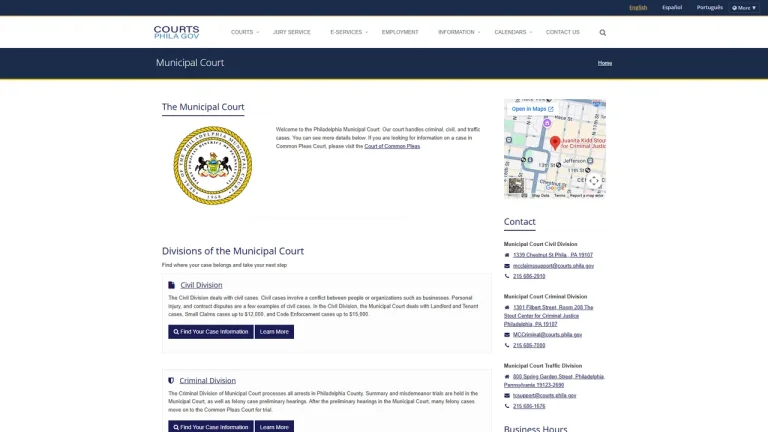
Philadelphia Municipal Court - Civil Division - Philadelphia, PA
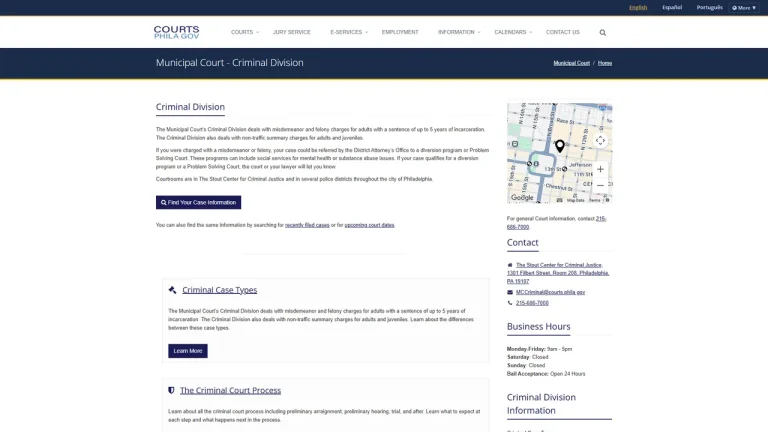
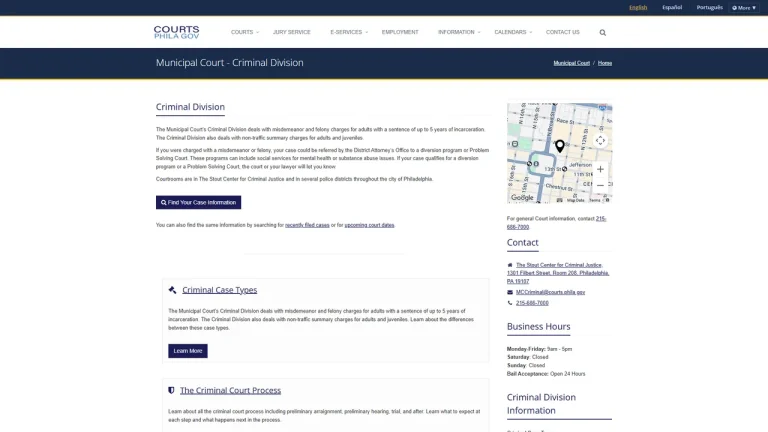
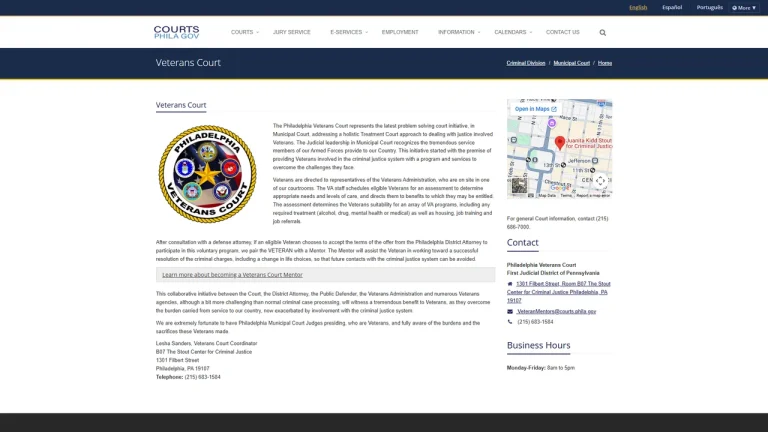
Juanita Kidd Stout Center for Criminal Justice - Philadelphia, PA
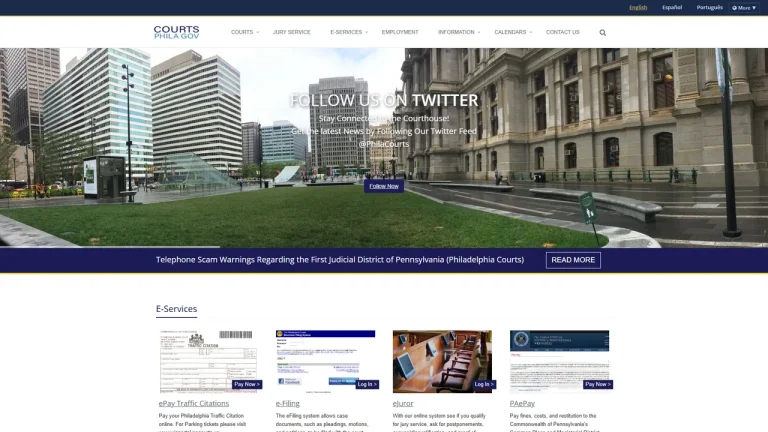
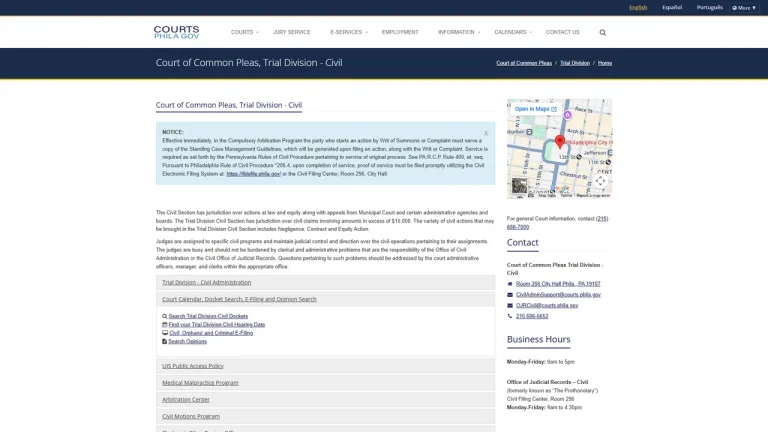
Common Pleas Court-Civil Trial - Philadelphia, PA

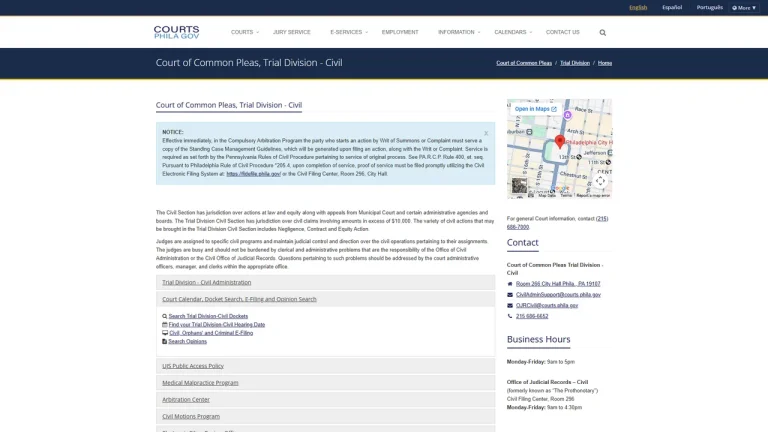
The First Judicial District of Pennsylvania in Philadelphia
The state and local judicial framework in Philadelphia is unified under the First Judicial District of Pennsylvania, known as the FJD, which is territorially coterminous with Philadelphia County. Operating as the busiest judicial system in the Commonwealth, the First Judicial District comprises two primary trial benches: the Philadelphia Court of Common Pleas and the Philadelphia Municipal Court. These courts exercise general and specialized jurisdiction over civil disputes, criminal prosecutions, family matters, probate proceedings, and traffic offenses arising across the city's neighborhoods from University City to Northeast Philadelphia.
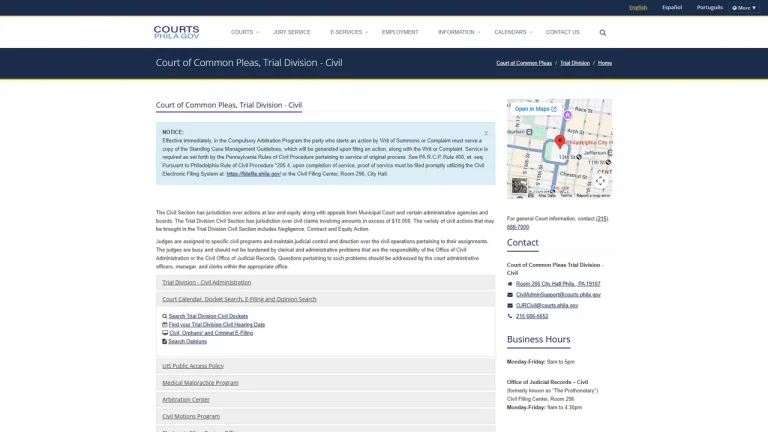
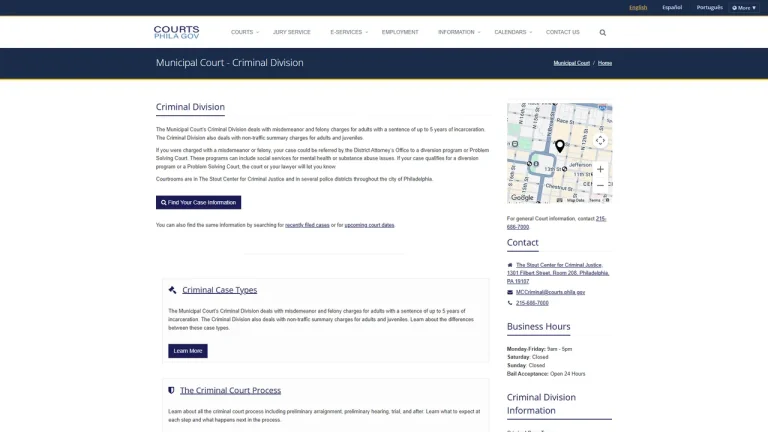
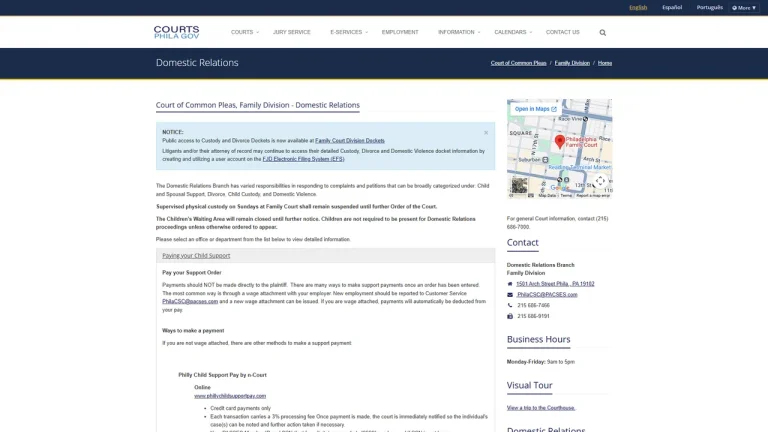
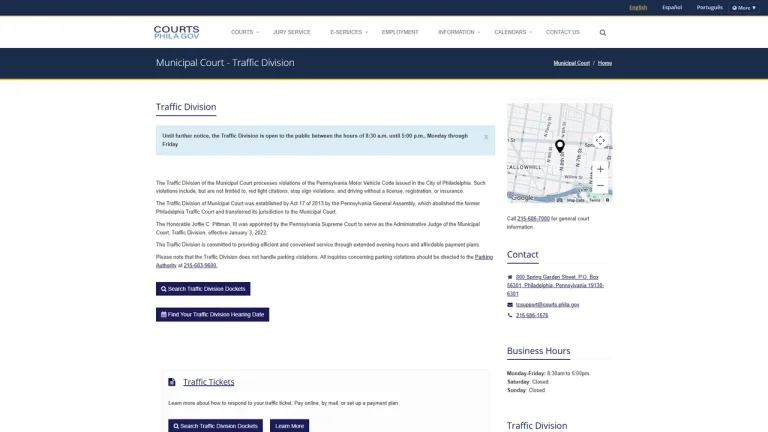
Judicial operations are distributed among several landmark municipal facilities across Center City. The Philadelphia Court of Common Pleas Civil Trial Division and Orphans' Court Division are centered within historic Philadelphia City Hall at Broad and Market Streets. Felony criminal trials and preliminary arraignments convene at the Juanita Kidd Stout Center for Criminal Justice at 1301 Filbert Street, while the Family Court Division operates from 1501 Arch Street handling domestic relations, custody, support, and juvenile proceedings. Specialized Municipal Court operations, including civil claims and summary eviction hearings, sit at 1339 Chestnut Street, alongside the Traffic Division situated on Spring Garden Street.
Pennsylvania appellate courts, including the Supreme Court of Pennsylvania, the Superior Court, and the Commonwealth Court, also maintain permanent filing offices and hold regular argument sessions in Philadelphia. Understanding which facility handles your specific legal matter is essential to timely filing and compliance with local court rules.
Common Court Filings, Documentation Requisites, and Statutory Fees
| Service / Matter | Required Documents / Prerequisites | Statutory Fee (USD) | Processing Timeline |
|---|---|---|---|
| Municipal Court Small Claims Action | Statement of claim, verified contract/invoice copies, defendant service address | $75.00 to $125.00 | Hearing scheduled within 45 to 60 days |
| Common Pleas Major Civil Filing | Civil complaint or praecipe for writ of summons, civil cover sheet | $333.25 | Docketed within 24 to 48 hours via PACFile |
| Landlord-Tenant Eviction Complaint | Lease agreement, notice to quit proof, certificate of rental suitability | $120.00 to $190.00 | Hearing set within 14 to 21 days |
| Certified Docket & Record Search | Case caption, docket number, written records request | $20.00 per certification | 1 to 5 business days |
Critical Legal Deadlines & Statutes in Pennsylvania
Litigants maneuvering through the First Judicial District must scrupulously manage statutory deadlines codified under the Pennsylvania Judicial Code. Under 42 Pa. C.S. § 1123, the Philadelphia Municipal Court maintains special civil jurisdiction over contract and tort claims where the amount in controversy does not exceed $12,000, while maintaining unlimited financial jurisdiction over landlord-tenant eviction matters. If a party receives an adverse judgment in the Philadelphia Municipal Court, an appeal for a trial de novo in the Court of Common Pleas must be filed within 30 days under Pa. R. Civ. P.M.C. 1001, or within 10 days for residential eviction judgments under 68 P.S. § 250.513.
For original actions initiated in the Philadelphia Court of Common Pleas, personal injury and property damage lawsuits are subject to a strict 2-year statute of limitations pursuant to 42 Pa. C.S. § 5524. Breach of written contract actions must be instituted within 4 years under 42 Pa. C.S. § 5525. In marital dissolution actions, Pennsylvania residency requirements mandate that at least one spouse must have been a bona fide resident of the Commonwealth for a minimum of 6 continuous months immediately preceding the divorce filing under 23 Pa. C.S. § 3104(b). Failure to assert defenses or comply with case management conference orders can trigger immediate default judgments under the First Judicial District local court rules.
Direct Agency Access vs. Retaining Legal Counsel
The First Judicial District provides accessible pathways for citizens handling routine disputes without legal counsel. Pro se litigants can file claims up to $12,000 in the Philadelphia Municipal Court Small Claims Division, where rules of evidence and formal pleadings are simplified compared to general trial litigation. The First Judicial District also maintains self-help dispute resources, family court intake centers at 1501 Arch Street for initial child support petitions, and online public access terminals for viewing dockets via the Pennsylvania Unified Judicial System web portal.
However, once litigation escalates to the Court of Common Pleas Major Jury or Commerce Court programs, formal legal representation is indispensable. Complex Pennsylvania civil litigation requires strict compliance with Pennsylvania Rules of Civil Procedure governing preliminary objections, motions in limine, depositions, and mandatory mediation tracks. Furthermore, corporate entities, limited liability companies, and estates appearing in the First Judicial District are prohibited under Pennsylvania common law from proceeding without licensed counsel. Engaging an experienced local trial attorney ensures your procedural rights and evidentiary record remain protected throughout Common Pleas proceedings.
Red Flags & Public Safety Warnings
- Unaccredited Court Runners: Do not hire unauthorized service agents or unlicensed individuals loitering near City Hall or the Stout Center offering to file documents or clear warrants outside official court clerk intake counters.
- Third-Party Filing Fees: Always submit electronic filings directly through official state systems like PACFile or the First Judicial District electronic filing portal to avoid third-party sites imposing deceptive surcharges.
- Telephone Warrant Extortion: Never provide credit card numbers or wire funds to callers claiming to represent the Philadelphia courts demanding immediate fine payments to cancel arrest warrants or purge contempt of court citations.
- Informal Settlement Scams: In landlord-tenant or small claims matters, avoid signing unofficial side agreements outside courtroom supervision without receiving a formal, signed court stipulation entered on the official Municipal Court docket.
Frequently Asked Questions
What is the First Judicial District of Pennsylvania?
The First Judicial District is the unified court system of Philadelphia County, comprising the Philadelphia Court of Common Pleas and the Philadelphia Municipal Court.
What is the jurisdictional limit for small claims in Philadelphia Municipal Court?
The Philadelphia Municipal Court has a maximum claim limit of $12,000 for small claims and general civil matters, but exercises unlimited financial jurisdiction over residential eviction actions.
Where do criminal court trials take place in Philadelphia?
Criminal trials, preliminary hearings, and arraignments are conducted primarily at the Juanita Kidd Stout Center for Criminal Justice located at 1301 Filbert Street in Center City.
Can I access Philadelphia state court records online?
Yes, public criminal and civil dockets can be searched online through the Pennsylvania Unified Judicial System Web Portal or the First Judicial District Civil Electronic Filing System.
Can I appeal a Philadelphia Municipal Court ruling?
Yes, civil decisions from the Philadelphia Municipal Court can be appealed to the Court of Common Pleas for a trial de novo, typically within 30 days of the judgment, or within 10 days for residential evictions.