
Police & Sheriff Departments in Massachusetts
Locate law enforcement agencies and sheriff offices in Massachusetts. Access municipal police precincts, county correctional facilities, and emergency contacts. Peace officers and sheriffs maintain public safety under commonwealth statutory guidelines. Explore our verified directory below to find police stations, detention centers, and administrative divisions.
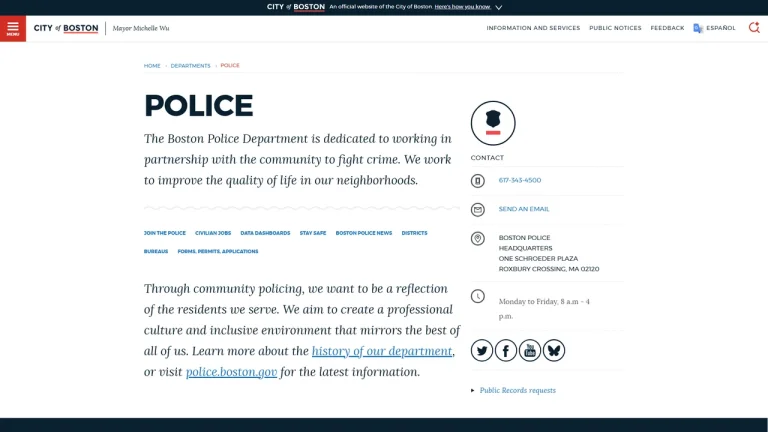

Worcester Police Bureau of Professional Standards - Worcester, MA

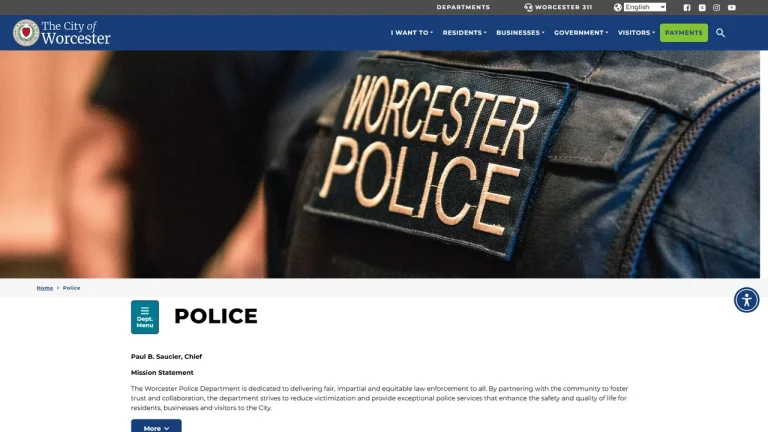
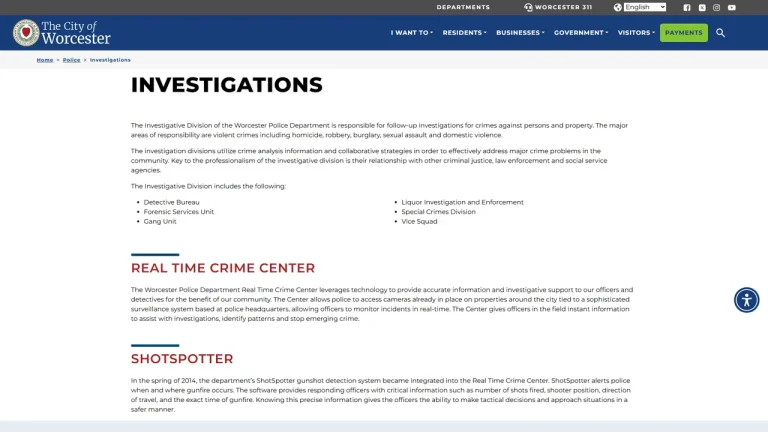
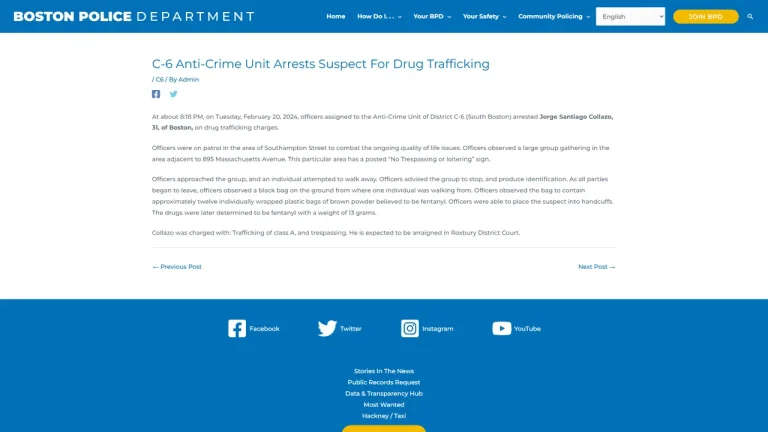


Worcester County Sheriff's Office Civil Process Division - Worcester, MA
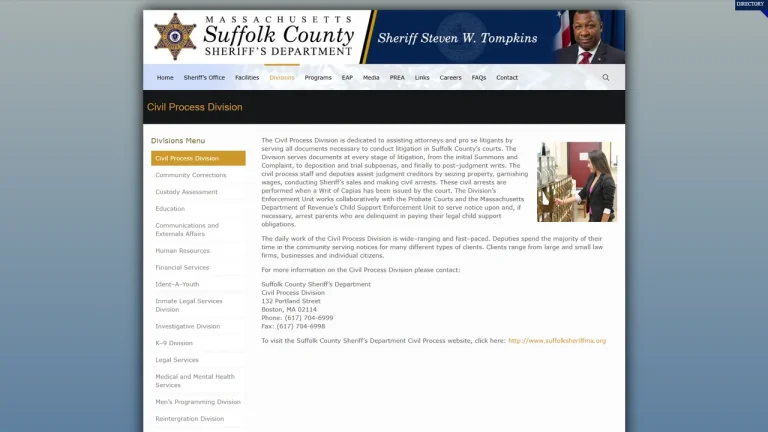
Suffolk County Sheriff's Department Civil Process Division - Boston, MA

Worcester Police Technical Services Division - Worcester, MA
Civil Process Division of Worcester County Sheriff's Office - Worcester, MA





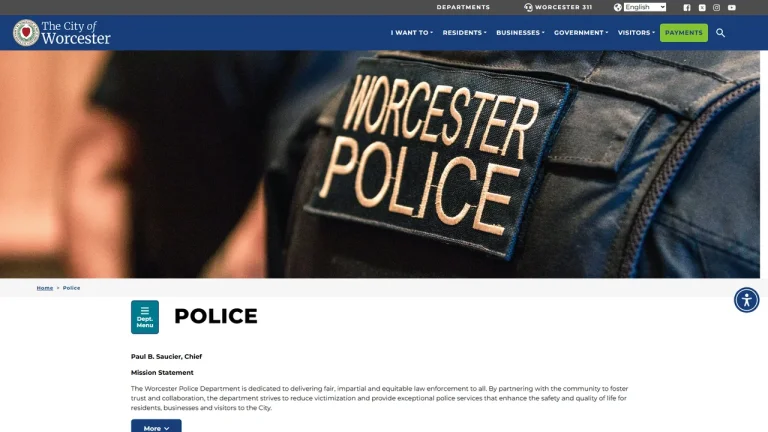

Boston Police District D-4 Back Bay/ South End/ Fenway - Boston, MA

Worcester State University Campus Police - Worcester, MA
Massachusetts Law Enforcement Structure & County Sheriff Jurisdiction
Law enforcement and correctional authority in Massachusetts operates across a distinct statutory structure dividing primary policing, state highway patrol, and county custodial detention. Frontline criminal interdiction, municipal traffic control, and emergency incident responses are conducted by municipal police departments established within each of the commonwealth 351 cities and towns. Municipal police chiefs serve as the primary licensing authorities for firearms and local administrative law enforcement.
Statewide law enforcement, forensic analysis, tactical response, and primary patrol over state highways, the Massachusetts Turnpike, and Logan International Airport are maintained by the Massachusetts State Police, headquartered in Framingham. The State Police operates through regional field troops across the commonwealth and conducts specialized homicide investigations in coordination with local District Attorneys offices.
Unlike county sheriffs in many parts of the nation that provide frontline road patrols, Massachusetts Sheriffs across the fourteen counties primarily administer County Houses of Correction, regional pretrial detention centers, court lockups, and prisoner transportation under state oversight. In addition, Sheriffs Offices deploy sworn deputy sheriffs to execute judicial process, civil attachments, and formal court writs. Comprehensive regulatory oversight and professional certification of all law enforcement personnel are governed statewide by the Massachusetts Peace Officer Standards and Training Commission.
Law Enforcement Services, Public Records & Fee Schedules
| Service / Matter | Required Documents / Prerequisites | Statutory Fee (USD) | Processing Timeline |
|---|---|---|---|
| Police Incident & Motor Vehicle Crash Report | Written request, report number, date and location, driver or party identification | $5 to $20 municipal administrative fee | 10 business days under public records law |
| Inmate Custody Inquiry & Facility Visitation | Valid state photo identification, visitor registration form, institutional security clearance | $0 (No state statutory fee) | 3 to 7 business days for security review |
| Civil Process Service (Deputy Sheriff) | Court summons, civil complaint, writ of execution, specific service instructions | Statutory fees plus mileage under general laws | 2 to 5 business days for service attempt |
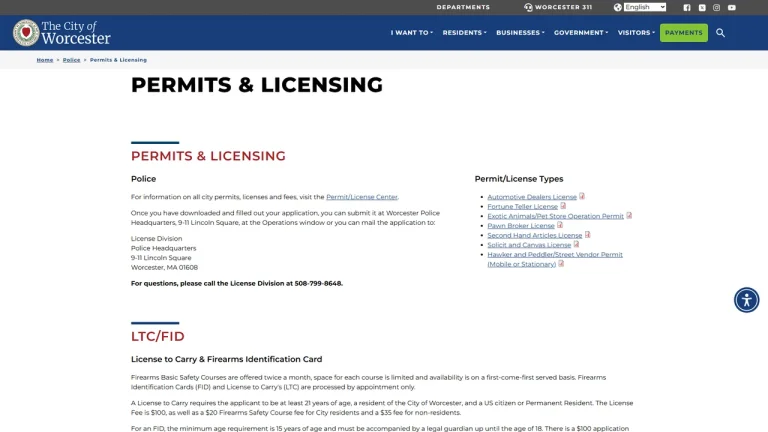
| License to Carry (LTC) / FID Firearms Card | State application, basic firearms safety certificate, fingerprints, photo, interview | $100 statutory licensing fee | 40 days statutory evaluation window |
Critical Legal Deadlines & Statutes in Massachusetts
Interactions with Massachusetts law enforcement and detention agencies are bound by strict procedural rules and constitutional constraints. Following an arrest, an individual held in custody must be presented for judicial arraignment without unreasonable delay, typically at the next scheduled court session under Mass. R. Crim. P. 7.
Pretrial bail determinations are regulated by the Massachusetts Bail Statute, codified at Mass. Gen. Laws ch. 276, § 58. When prosecutors file a motion for pretrial detention based on dangerousness under Mass. Gen. Laws ch. 276, § 58A, an accused individual may be detained without bail pending an evidentiary hearing, which must be held within three court business days unless a continuance is granted for good cause.
Access to law enforcement logs and completed police incident reports is governed by the Massachusetts Public Records Law, codified at Mass. Gen. Laws ch. 66, § 10, requiring record custodians to comply or provide written justification within ten business days. For claims involving alleged civil rights violations or misconduct by peace officers, the Massachusetts Tort Claims Act under Mass. Gen. Laws ch. 258, § 4 mandates formal presentment of the claim in writing to the appropriate municipal or commonwealth executive within two years of the incident.
Direct Agency Access vs. Retaining Legal Counsel
Citizens regularly interact with local police departments and county sheriff offices for routine administrative requests. Filing non-emergency police incident reports, obtaining motor vehicle accident documentation, submitting firearms license applications to a local licensing authority, or scheduling inmate visitation at a County House of Correction can be managed directly without legal representation.
Engaging a criminal defense lawyer or civil rights attorney admitted to practice in Massachusetts is essential when an individual faces custodial interrogation, formal booking, or a dangerousness hearing under Section 58A. An attorney is vital for moving to suppress evidence gathered in violation of Article 14 of the Massachusetts Declaration of Rights, handling bail appeals before a Superior Court judge, representing targets of grand jury investigations, or filing formal misconduct complaints before the Peace Officer Standards and Training Commission.
Red Flags & Consumer Protection Alerts
- Beware of fraudulent telephone schemes where callers impersonate officers from the Massachusetts State Police or a County Sheriff Office, threatening imminent arrest for missed jury duty unless immediate payments are wired.
- Reject unauthorized commercial bail facilitators charging processing surcharges above the statutory bail commissioner or clerk fee established under commonwealth law.
- Do not pay third-party online lookup services for inmate rosters or arrest blotters that are accessible directly through public sheriff portals without charge.
- Verify that any firearms licensing transactions or official background check payments are handled directly through authorized police stations or commonwealth departments.
Frequently Asked Questions
What is the primary role of a County Sheriff in Massachusetts?
In Massachusetts, County Sheriffs primarily administer County Houses of Correction, manage pretrial detention facilities, transport prisoners, provide court security, and serve civil judicial process rather than conducting primary municipal street patrols.
How does dangerousness detention under Section 58A operate in Massachusetts?
Under Mass. Gen. Laws ch. 276, § 58A, the commonwealth can move to hold an individual accused of specific felony offenses or domestic violence without bail for up to 120 days if a judge determines no conditions of release will reasonably assure public safety.
How do I obtain a copy of a police accident report in Massachusetts?
Crash reports can be obtained by submitting a public records request directly to the records division of the municipal police department or the State Police barracks that investigated the collision, subject to the ten-day response rule under Mass. Gen. Laws ch. 66, § 10.
What state body oversees police certification and discipline in Massachusetts?
The Massachusetts Peace Officer Standards and Training (POST) Commission regulates officer certification, investigates misconduct allegations, and enforces disciplinary suspensions or decertification across all law enforcement agencies.
Where are firearms licenses (LTC and FID) processed in Massachusetts?
Under commonwealth law, applications for a License to Carry or Firearms Identification card must be submitted directly to the Chief of Police in the city or town where the applicant resides or maintains a principal place of business.