
State Agencies in Worcester
Accessing Massachusetts state agencies in Worcester allows residents and businesses to resolve critical licensing, public assistance, taxation, and administrative matters efficiently. Understanding statutory notice requirements and agency jurisdiction ensures your rights remain fully protected under state law. Review our verified directory below to locate regional offices, public records access officers, and hearing facilities across Worcester County.

Massachusetts Department of Revenue - Child Support Services - Worcester, MA
Massachusetts Commission Against Discrimination - Worcester, MA
Massachusetts State Police Crime Laboratory - Worcester, MA
Department of Early Education and Care - Central MA Office - Worcester, MA

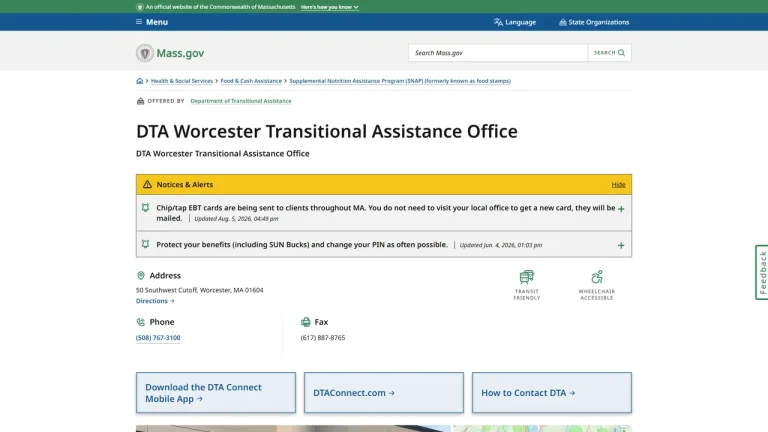
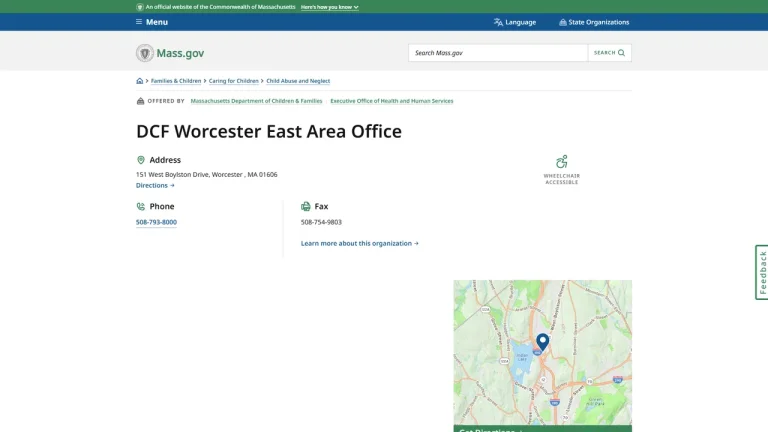
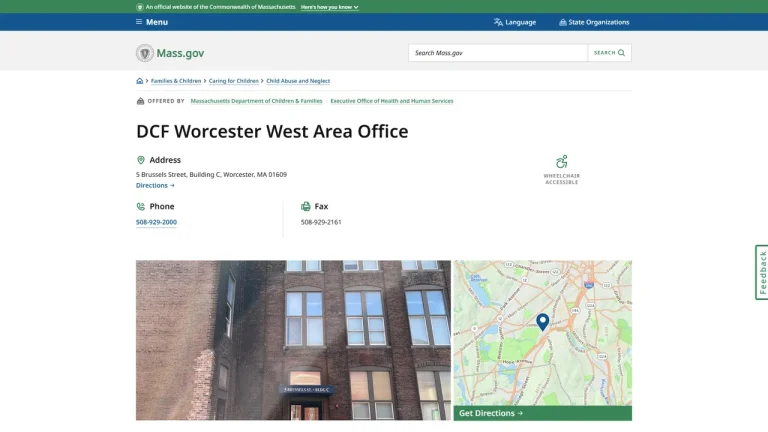
Department Of Children And Families (Worcester East) - Worcester, MA
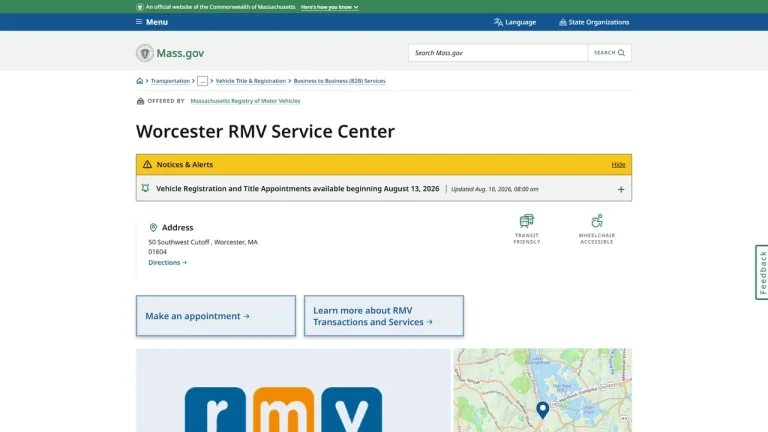

Navigating Massachusetts State Agency Authority in Worcester
State agencies operating throughout Worcester and Worcester County deliver vital regulatory, economic, and social infrastructure for the Central Massachusetts region. Operating from administrative complexes in downtown Worcester and the Southwest Cutoff corridor, regional offices handle taxation, public assistance, environmental permitting, and child protection services.
Judicial and administrative oversight centers heavily within the Worcester Trial Court complex on Main Street, which accommodates the Worcester Superior Court and Central District Court. Residents and business operators across neighborhoods such as Greendale, Tatnuck, the Canal District, and Main South frequently interact with state departments for formal licensure, regulatory filings, and compliance disputes.
Engaging effectively with state authorities requires strict adherence to Commonwealth administrative procedures and statutory deadlines. Knowing which agency exercises direct jurisdiction over your matter ensures timely filing, preserves critical appellate rights, and prevents administrative defaults.
Common Massachusetts State Agency Matters, Fees & Timelines
| Service / Matter | Required Documents / Prerequisites | Statutory Fee (USD) | Processing Timeline |
|---|---|---|---|
| Certified State Vital Record Issuance | Valid government photo ID, completed application, proof of direct lineal relationship | $32.00 to $42.00 statutory fee | 2 to 4 weeks by mail; expedited electronic processing available |
| Executive Agency Public Records Request | Written request to designated Records Access Officer detailing records sought | $0.00 first 4 hours; up to $25.00 hourly rate thereafter | 10 business days for mandatory initial written determination |
| State Administrative Hearing Petition | Written petition for adjudicatory hearing, copy of agency determination, statement of claims | $0.00 to $150.00 depending on regulatory board | 30 to 90 calendar days to schedule formal hearing |
| Professional License Renewal & Verification | Completed renewal filing, documented continuing education units, good standing proof | $50.00 to $250.00 biennial statutory fee | 5 to 10 business days via electronic licensing portal |
Critical Legal Deadlines & Statutes in Massachusetts
Statutory timelines govern every formal proceeding involving Massachusetts state administrative entities. Under the Massachusetts Public Records Law codified at Mass. Gen. Laws ch. 66, § 10, an agency Records Access Officer must provide a written response within 10 business days of receiving a records request, detailing compliance or specific statutory exemptions.
For individuals challenging an adverse final state administrative determination, Mass. Gen. Laws ch. 30A, § 14 establishes an unyielding deadline: an action for judicial review must be commenced in the Superior Court within 30 days after the receipt of the final agency decision. Missing this 30-day jurisdictional window permanently forfeits judicial review rights.
When asserting tort claims against the Commonwealth or its executive agencies, the Massachusetts Tort Claims Act under Mass. Gen. Laws ch. 258, § 4 mandates that a formal written presentment of claim be delivered to the appropriate executive official within 2 years of the injury. Legal action in court cannot be initiated until the agency denies the claim or 6 months elapse, and suit must be commenced within the 3-year statute of limitations established by Mass. Gen. Laws ch. 260, § 2A. Furthermore, administrative discrimination complaints brought before the Massachusetts Commission Against Discrimination must be filed within 300 days of the unlawful conduct pursuant to Mass. Gen. Laws ch. 151B, § 5.
Direct Agency Access vs. Retaining Legal Counsel
Navigating routine public services directly is standard practice for straightforward administrative tasks. Citizens can independently request certified certificates from the Registry of Vital Records, submit routine public records requests to agency access officers, check business certifications, or manage state tax filings through the MassTaxConnect web portal without legal representation.
Conversely, formal legal representation becomes vital when administrative disputes escalate into contested adjudicatory proceedings. For hearings before the Department of Unemployment Assistance, fair hearings within the Department of Children and Families, or license revocation defense before the Division of Occupational Licensure, retaining an experienced administrative attorney safeguards your professional livelihood. An attorney ensures compliance with evidentiary standards, issues administrative subpoenas, cross-examines agency witnesses, and establishes a clean evidentiary record essential for Superior Court review.
For small civil monetary disputes involving public authorities or state vendors, pro se litigants often utilize the small claims session of the Worcester District Court. Under Mass. Gen. Laws ch. 218, § 21, the standard statutory small claims limit is $7,000. However, when complex government immunities or administrative remedies under Chapter 30A are at stake, legal counsel is indispensable.
Red Flags & Avoiding Public Agency Scams
- Predatory lookalike portals: Deceptive third-party commercial websites imitating official state platforms that charge exorbitant processing fees for free or standard government forms.
- Impersonation fraud: Phone calls, text messages, or phishing emails claiming to be from the Massachusetts Department of Revenue demanding immediate payment through gift cards, digital payment apps, or wire transfers to avert arrest.
- Unaccredited representation: Non-lawyer hearing consultants or unauthorized practitioners who guarantee favorable outcomes before administrative boards without professional licenses or legal malpractice accountability.
- Deceptive compliance solicitations: Misleading mailings sent to registered businesses demanding substantial fees for mandatory state labor law posters or certificates of good standing readily obtainable at nominal cost.
Frequently Asked Questions
Where are primary state judicial and administrative services located in Worcester?
Major state judicial operations are centered at the Worcester Trial Court at 225 Main Street, housing the Worcester Superior Court, Central District Court, Housing Court, and Probate and Family Court. Key executive agencies maintain regional facilities along Main Street in Downtown Worcester and the Southwest Cutoff commercial district.
How do I submit a public records request to a Massachusetts state agency in Worcester?
Written requests must be directed to the designated Records Access Officer of the specific state department. Under Massachusetts law, the agency must provide an official written response within 10 business days outlining the production schedule, applicable search fees, or statutory exemptions.
What is the statutory deadline to appeal a state agency administrative decision?
Under Chapter 30A of the Massachusetts General Laws, you have exactly 30 days from the date of receipt of the final agency decision to file a complaint for judicial review in the Superior Court. Failure to file within this 30-day window permanently extinguishes your appeal.
What is required before filing a personal injury claim against a state department?
Pursuant to the Massachusetts Tort Claims Act, you must complete formal written presentment of your claim to the executive head of the agency within 2 years of the date of the incident. You must then wait 6 months for a response or denial before initiating a lawsuit in court.
Do I need an attorney for an administrative hearing before a state board?
While pro se self-representation is legally permitted, retaining an administrative attorney is highly advised for complex evidentiary hearings involving professional licenses, disciplinary actions, or substantial financial liabilities to preserve your rights and record for appeal.