
Federal Agencies in Vermont
Interacting with federal agencies in Vermont requires navigating federal regional headquarters, international border enforcement sectors, and specialized processing centers. Understanding federal administrative channels and appellate deadlines protects your procedural rights before federal administrative determinations become final. Explore our verified directory below to locate federal agency offices, court clerk divisions, and legal resources across Vermont.



US Department of Housing and Urban Development - Burlington, VT



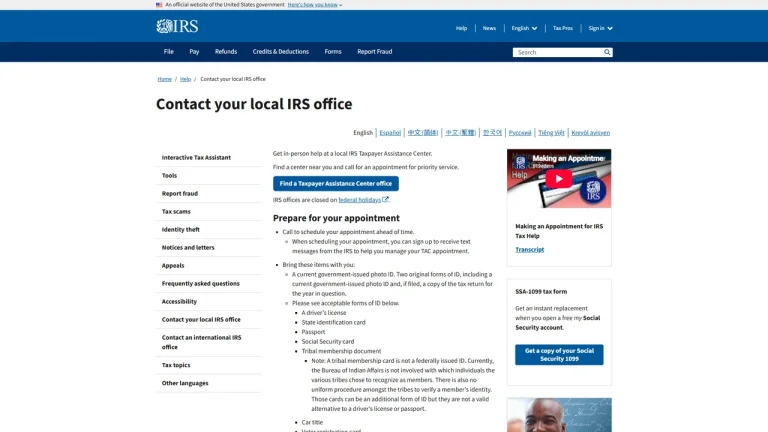
Internal Revenue Service (IRS) Taxpayer Assistance Center - Burlington, VT
The Administrative Scope of Federal Agencies in Vermont
Federal administration throughout Vermont operates under the unified jurisdiction of the United States District Court for the District of Vermont, with divisional courthouses situated in Burlington and Rutland. Federal agencies across the state execute executive mandates, border security, immigration adjudication, agricultural oversight, and environmental conservation across all fourteen counties.
Because Vermont shares an international border with Canada, federal agencies maintain a substantial strategic presence. The United States Citizenship and Immigration Services (USCIS) operates the prominent Vermont Service Center in Essex Junction, which processes high volumes of immigration benefit petitions for regional, national, and international applicants. Concurrently, U.S. Customs and Border Protection (CBP) directs northern border operations through the Swanton Border Patrol Sector, coordinating with Homeland Security Investigations (HSI).
Other key federal entities include the Federal Bureau of Investigation (Burlington Resident Agency), the Bureau of Alcohol, Tobacco, Firearms and Explosives (ATF), the U.S. Forest Service managing the Green Mountain National Forest from Rutland, and the Department of Veterans Affairs Medical Center in White River Junction. Federal administrative determinations in Vermont are subject to review under the federal Administrative Procedure Act.
Federal Agency Requests, Statutory Filings, and Timelines
| Service / Matter | Required Documents / Prerequisites | Statutory Fee (USD) | Processing Timeline |
|---|---|---|---|
| Federal Freedom of Information Act (FOIA) | Written request identifying records, personal identity verification (DOJ Form 361) | Free search up to 2 hours; $0.10/page reproduction fee | 20 business days statutory determination under 5 U.S. Code § 552 |
| USCIS Immigration Benefit Petition | Standard USCIS petition, certified vital records, biometric verification | Statutory filing fee variable by petition classification | 6 to 18 months for Vermont Service Center adjudication |
| Federal Pretrial Detention Hearing | Government motion for detention, pretrial services assessment report | $0 (Statutory hearing fee not applicable) | Held within 3 to 5 days under 18 U.S. Code § 3142 |
| Appeal from District Court to Second Circuit | Notice of appeal filed with district clerk, designated record on appeal | $605 statutory docketing fee ($5 notice fee plus $600 docket fee) | Must file within 30 days after entry of final judgment |
Critical Legal Deadlines & Statutes in Vermont
Engaging with federal administrative agencies in Vermont requires strict adherence to federal statutory timelines. Under the federal Administrative Procedure Act, codified at 5 U.S. Code § 702, parties adversely affected by an administrative ruling may seek judicial review in the United States District Court for the District of Vermont. Under 28 U.S. Code § 2401, general civil actions against the United States must be commenced within 6 years after the right of action first accrues.
For tort claims alleging property damage or personal injury caused by federal employees, the Federal Tort Claims Act (FTCA) sets mandatory administrative prerequisites. Under 28 U.S. Code § 2675, a claimant must present an administrative claim (Standard Form 95) in writing to the appropriate federal agency within 2 years after the claim accrues. If the federal agency denies the claim, a lawsuit in the U.S. District Court must be filed strictly within 6 months of the date of mailing of the final denial pursuant to 28 U.S. Code § 2401(b).
Appellate deadlines are uncompromising in federal practice. Pursuant to Federal Rule of Appellate Procedure 4(a)(1)(A), an appeal from the District of Vermont to the United States Court of Appeals for the Second Circuit must be filed with the district court clerk within 30 days of entry of the final judgment, or within 60 days if the federal government is a party. Criminal prosecutions for non-capital federal offenses are governed by the 5-year statute of limitations under 18 U.S. Code § 3282.
Direct Agency Access vs. Legal Counsel
Citizens and legal residents can navigate many standard federal procedures directly through agency portals. Submitting routine immigration applications online through USCIS, lodging FOIA requests with CBP or the U.S. Forest Service, managing veterans healthcare benefits at the White River Junction VA facility, or applying for standard passports can be handled independently without retaining legal counsel.
However, when administrative disputes escalate or involve formal enforcement, legal representation is indispensable. Navigating Requests for Evidence (RFEs) or Notices of Intent to Deny (NOID) from the USCIS Vermont Service Center carries severe immigration and removal consequences. Similarly, individuals or business entities facing federal grand jury subpoenas or civil enforcement actions by federal regulatory agencies require counsel admitted to the federal bar. While the Vermont Superior Court provides a Small Claims Division handling minor disputes up to $5,000 under 12 V.S.A. § 5531, federal agencies possess sovereign immunity from state small claims actions, requiring formal litigation in the U.S. District Court for the District of Vermont.
Common Red Flags & Federal Agency Scams
- Telephone scams from callers impersonating CBP, USCIS, or IRS agents threatening immediate arrest or deportation unless unpaid administrative fees are wired or paid via gift cards.
- Unauthorized immigration consultants or non-attorney notarios operating near border towns charging substantial fees to file standard USCIS forms without legal authorization to practice immigration law.
- Deceptive commercial web portals that charge $50 to $100 to prepare basic federal FOIA requests or passport applications that are offered directly to the public for free on official .gov websites.
- Unsolicited messages demanding advance fees to release international mail parcels allegedly impounded by federal customs inspectors at Vermont ports of entry.
Frequently Asked Questions
Where are federal district courthouses located in Vermont?
The United States District Court for the District of Vermont maintains two divisional courthouses: the main federal courthouse in Burlington and the federal courthouse located in Rutland.
Which federal appellate court has jurisdiction over Vermont federal decisions?
Appeals from decisions issued by the United States District Court for the District of Vermont are reviewed by the United States Court of Appeals for the Second Circuit.
What is the role of the USCIS Vermont Service Center?
Located in Essex Junction, the Vermont Service Center is one of the primary national processing facilities for U.S. Citizenship and Immigration Services, handling humanitarian petitions, employment visas, and family-based immigration filings.
What is the deadline for filing a tort claim against a federal agency in Vermont?
Under 28 U.S. Code § 2675, you must present a formal administrative tort claim (Form SF-95) to the responsible federal agency within 2 years of the date the injury or property damage occurred.
What is the Swanton Sector of the U.S. Border Patrol?
The Swanton Sector is the regional command of U.S. Customs and Border Protection responsible for securing the international land border encompassing all of Vermont, managing border patrol stations, checkpoints, and international ports of entry.