
State Law Enforcement in Massachusetts
Access verified contact information, barracks locations, and administrative guidelines for state policing agencies throughout Massachusetts. Understanding jurisdictional authority between the state police, environmental officers, and municipal forces streamlines public record and incident inquiries. Explore our comprehensive commonwealth directory below to find local barracks and agency services.

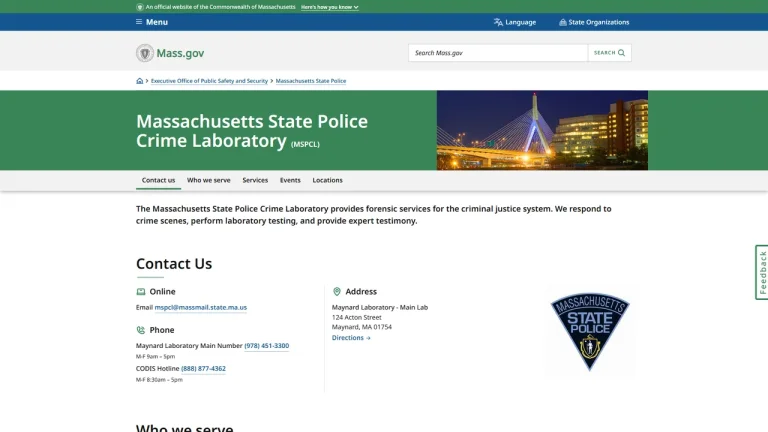
Massachusetts State Police Crime Laboratory - Worcester, MA
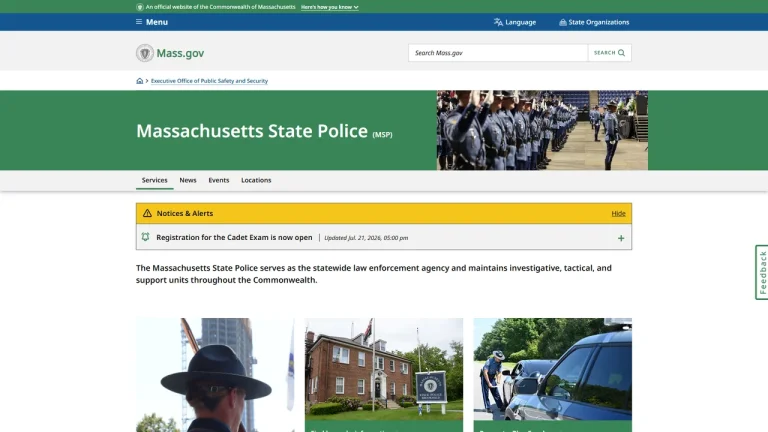
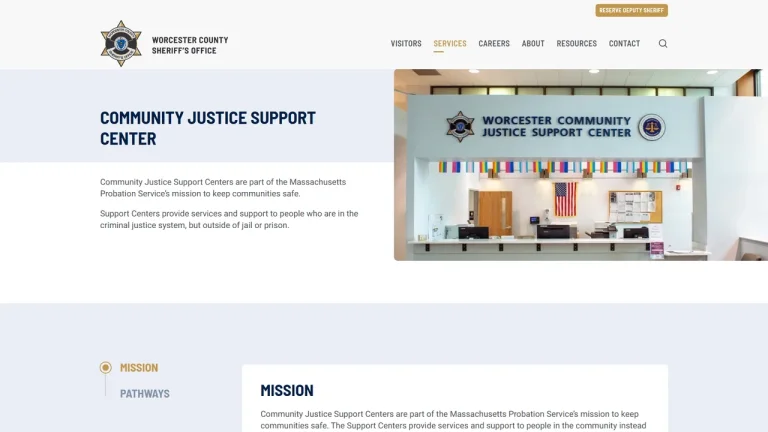
Worcester County Sheriff's Office Community Justice Support Center - Worcester, MA
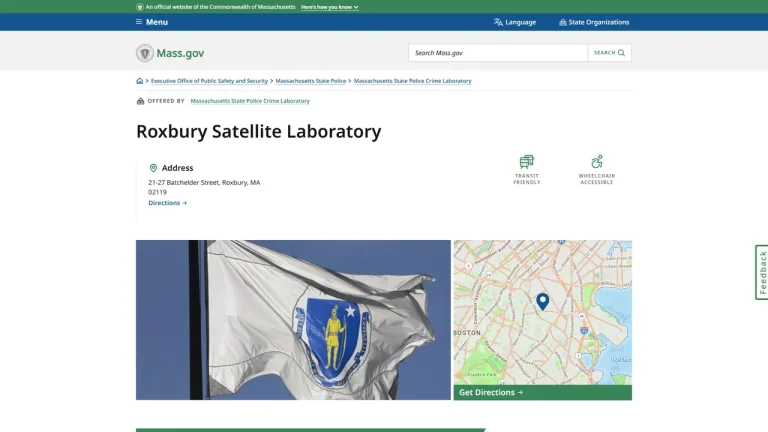

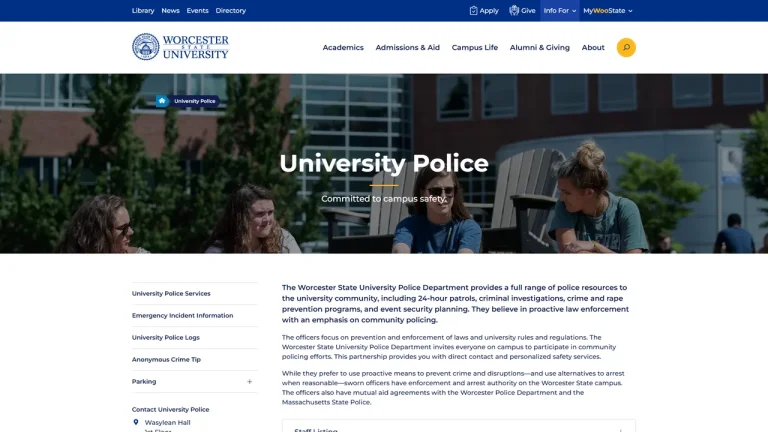
Worcester State University Campus Police - Worcester, MA
Jurisdiction and Operations of Massachusetts State Law Enforcement
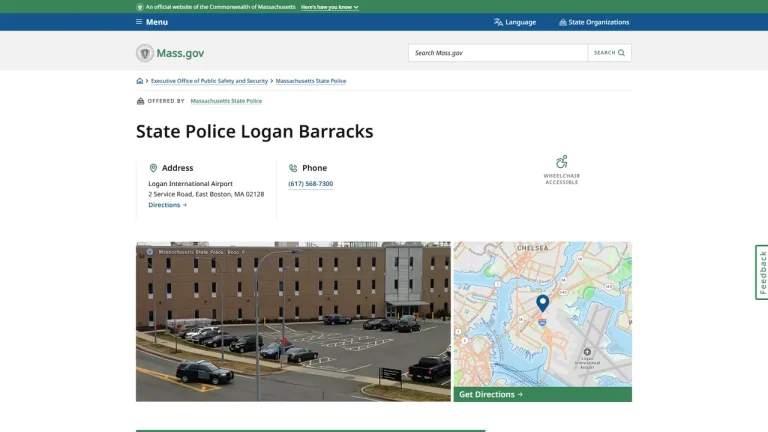
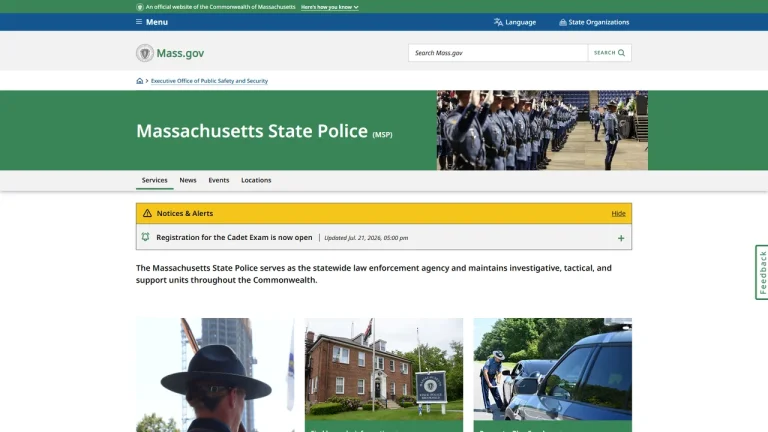
State law enforcement in the Commonwealth of Massachusetts is primarily anchored by the Massachusetts State Police (MSP), headquartered in Framingham. As the primary statewide policing body, the MSP exercises broad statutory jurisdiction across state highways, commonwealth-owned properties, Logan International Airport, and major criminal investigations spanning all fourteen counties.
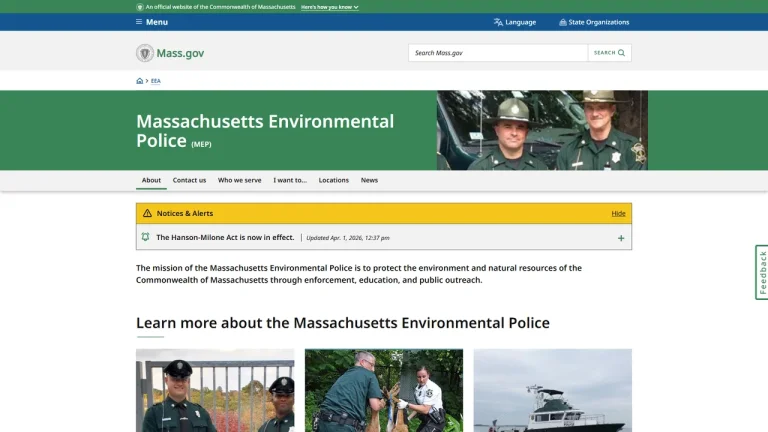
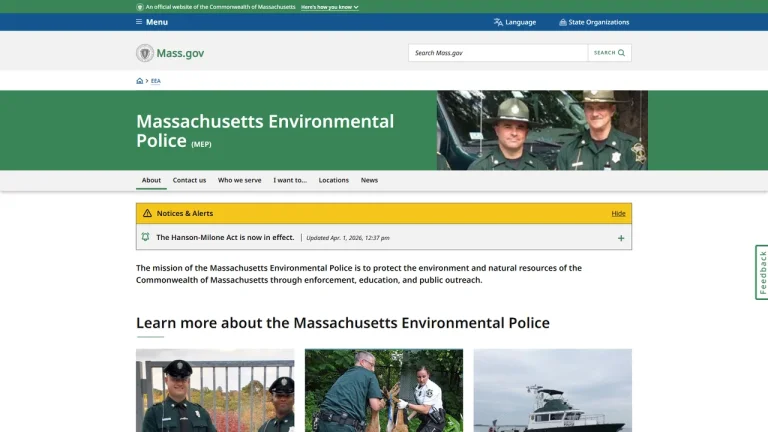
The MSP operates through distinct regional troops, including Troop A (Northeast and North Shore), Troop B (Western Massachusetts and the Berkshires), Troop C (Central Massachusetts), Troop D (Southeastern Massachusetts and Cape Cod), Troop F (Logan International Airport and Port Properties), and Troop H (Greater Boston Metropolitan Area). Specialized statewide bodies, including the Massachusetts Environmental Police (MEP), enforce natural resource, hunting, and maritime laws across inland waterways and coastal zones.
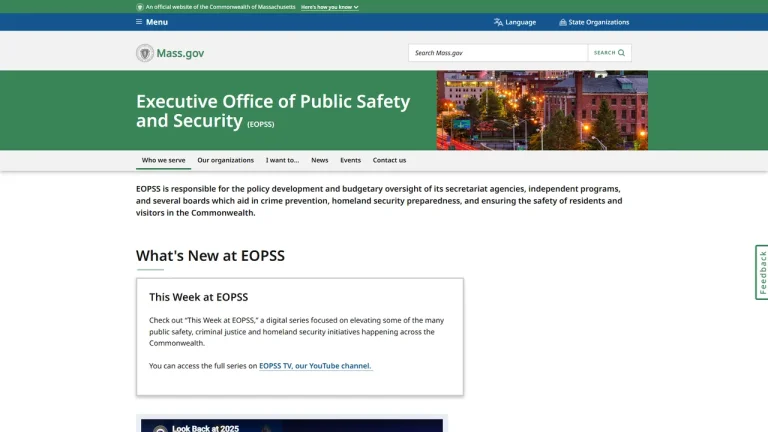
State policing bodies collaborate closely with the Office of the Massachusetts Attorney General, elected district attorneys across county jurisdictions, and municipal police departments. The state police manage major incident reconstruction, forensic laboratory analysis through the State Police Crime Laboratory, and centralized law enforcement information systems under the Executive Office of Public Safety and Security (EOPSS).
Core Law Enforcement Inquiries, Statutory Fees, and Timelines
| Service / Matter | Required Documents / Prerequisites | Statutory Fee (USD) | Processing Timeline |
|---|---|---|---|
| State Police Crash Report Request | Date of crash, highway/town location, involved driver license number, registration | $20 statutory search fee | 5 to 10 business days via online portal |
| Public Records Request (Public Records Law) | Detailed written record description, requester contact information | $0 initial request fee (reproduction fees may apply) | 10 business days statutory response window |
| Personal CORI Background Clearance | iCORI registration, government-issued photo ID, notarized authorization | $25 standard statutory inquiry fee | Immediate online access or 5 to 7 days by mail |
| Evidence & Property Retrieval | District attorney property release letter, valid photo ID, case docket number | $0 administrative fee | 7 to 14 business days following approval |
Critical Legal Deadlines & Statutes in Massachusetts
Administrative inquiries, public record actions, and legal proceedings involving Massachusetts law enforcement agencies are bound by explicit statutory timelines. Under the Massachusetts Public Records Law, state and municipal policing agencies must acknowledge and respond to written public records requests within ten business days pursuant to Mass. Gen. Laws ch. 66, § 10. For individuals involved in motor vehicle collisions involving injury or property damage exceeding $1,000, a crash operator report must be submitted within five days of the incident under Mass. Gen. Laws ch. 90, § 26.
Individuals subject to custodial arrest maintain an explicit statutory right to use the telephone within one hour of arrival at a state police barracks or detention station pursuant to Mass. Gen. Laws ch. 276, § 33A. Claimants pursuing civil tort claims against the state police for property damage or personal injury must deliver formal presentment to the executive office within two years under the Massachusetts Tort Claims Act as mandated by Mass. Gen. Laws ch. 258, § 4, prior to initiating any action under the general three-year limitations statute set forth in Mass. Gen. Laws ch. 260, § 2A.
Direct Agency Access vs. Retaining Legal Counsel
Citizens can directly manage standard administrative services, such as purchasing certified accident reports, requesting personal CORI background checks through the Department of Criminal Justice Information Services (DCJIS), or filing non-emergency administrative complaints with the State Police Office of Professional Integrity. Official commonwealth portals offer self-service access for these routine clerical interactions.
However, engaging legal representation is essential during active criminal investigations, vehicle seizures, firearm licensing denials, or custodial interrogations by state police detectives. Retaining an attorney admitted to practice by the Supreme Judicial Court of Massachusetts safeguards constitutional protections under Article 12 of the Massachusetts Declaration of Rights, prevents self-incriminating disclosures during investigative interviews, and ensures proper representation at District Court show-cause clerk magistrate hearings or bail proceedings.
Procedural Pitfalls & Anti-Fraud Warnings
- Commercial Background Record Portals: Do not pay private third-party lookup websites recurring monthly charges; official Massachusetts criminal history checks should be obtained directly through the state iCORI service.
- Imposter Law Enforcement Demands: The Massachusetts State Police does not solicit fine payments, court costs, or warrant clearances over the phone or demand transfers via prepaid debit cards or wire services.
- Statutory Presentment Defects: Civil injury claims against the Commonwealth will be permanently dismissed if formal written presentment is not properly served on the designated executive officer within two years.
- Overly Broad Record Demands: Submitting overly broad public records inquiries without date ranges or specific incident identifiers often triggers substantial document compilation fees and procedural delays.
Frequently Asked Questions
How do I request a crash report from the Massachusetts State Police?
You can obtain a copy of a Massachusetts State Police collision report online through the Registry of Motor Vehicles or by submitting a written request with the required statutory fee to the Massachusetts State Police Crash Records Section.
What is the jurisdictional difference between State Police and municipal police?
The Massachusetts State Police exercises statewide primary jurisdiction over interstate highways, state parkways, state properties, and Logan Airport, while municipal police departments maintain primary local jurisdiction within their designated town or city limits.
What are my statutory telephone rights following an arrest in Massachusetts?
Under Massachusetts General Laws, any arrested individual brought to a state police barracks or municipal police station must be permitted to make a telephone call within one hour of arrival to contact family, arrange bail, or engage legal counsel.
How does an individual appeal a firearm identification (FID) card or LTC denial?
If a licensing authority denies or revokes a License to Carry (LTC) or FID card, the applicant must file a formal petition for judicial review in the local District Court within ninety calendar days of receiving the denial notice.
How long does the Massachusetts State Police have to answer a public records request?
Under the Massachusetts Public Records Law, the agency must provide a formal response within ten business days, confirming whether records exist, detailing any applicable statutory exemptions, or calculating estimated reproduction fees.