
Police & Sheriff Departments in New York City
Accessing police and sheriff departments in New York City connects residents with municipal law enforcement, civil enforcement divisions, and public safety records. Understanding the jurisdictional division between the NYPD and the New York City Sheriff's Office is vital for accessing official municipal services. Browse our directory below to locate precinct houses, contact sheriff borough offices, and request verified records.

New York City Police Department - 5th Precinct - New York, NY


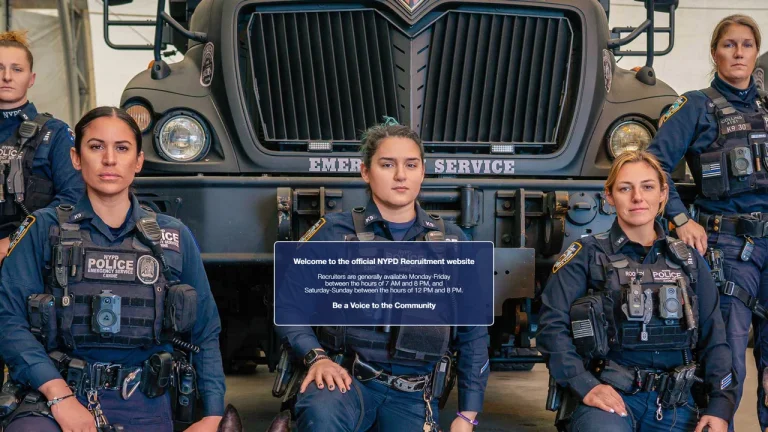
New York City Police Department - 30th Precinct - New York, NY

NYPD Certificate of Conduct & Non-Criminal Fingerprint Section - New York, NY


New York City Police Department - Headquarters - New York, NY

Port Authority Police Command - Port Authority Bus Terminal - New York, NY


New York City Police Department - 13th Precinct - New York, NY
New York City Police Department - 73rd Precinct - Brooklyn, NY


Distinct Jurisdictions of the NYPD and NYC Sheriff's Office
In the City of New York, law enforcement is strictly partitioned between criminal public safety and civil enforcement. The primary municipal police agency is the New York City Police Department (NYPD), operating from its central headquarters at One Police Plaza in Lower Manhattan. The NYPD oversees seventy-seven patrol precincts divided among eight patrol borough commands covering Manhattan, Brooklyn, Queens, the Bronx, and Staten Island, providing emergency response, neighborhood patrols, and criminal investigations.
In contrast, the New York City Sheriff's Office serves as the primary civil law enforcement agency of the city, functioning as an operational division of the New York City Department of Finance. Operating from borough facilities under the direction of the Sheriff of the City of New York, the Sheriff's Office is responsible for executing civil court mandates rather than routine street patrols.
Deputy sheriffs possess peace officer powers and are legally charged with serving and enforcing process issued by the New York State Unified Court System. Key responsibilities include carrying out warrants of eviction issued by the NYC Civil Court Housing Part, executing property executions and bank account levies to satisfy money judgments, serving civil orders of protection, arresting individuals named on civil bench warrants, and enforcing municipal tax laws regarding contraband tobacco and unlicensed cannabis distribution.
Municipal Law Enforcement and Civil Enforcement Fee Schedules
| Service / Matter | Required Documents / Prerequisites | Statutory Fee (USD) | Processing Timeline |
|---|---|---|---|
| NYPD Collision / Accident Report | Incident date, street location, precinct number, driver identification | $0.00 online ($10.00 for certified physical copy) | 7 to 14 business days |
| Sheriff Warrant of Eviction Execution | Court-issued warrant of eviction, clerk certification, property index number | $105.00 statutory fee + mileage | 14-day statutory notice period |
| NYPD Certificate of Conduct (Clearance) | Live-scan fingerprint receipt, valid government ID, proof of NYC residence | $50.00 processing fee | 10 to 15 business days |
| Sheriff Execution of Money Judgment (Levy) | Court-filed transcript of judgment, formal sheriff praecipe/instructions | $40.00 - $120.00 + poundage percentage | 30 to 60 business days |
Critical Deadlines & Statutes in New York
Interactions with municipal law enforcement agencies are controlled by strict statutory frameworks. Access to public records, including NYPD administrative records and historical documentation, is governed by the New York Freedom of Information Law (FOIL) under N.Y. Pub. Off. Law § 89, which requires public agencies to grant, deny, or formally acknowledge records requests within five business days.
The enforcement of civil court money judgments by the Sheriff's Office is governed by the New York Civil Practice Law and Rules under N.Y. C.P.L.R. § 5230 for formal property executions and N.Y. C.P.L.R. § 5232 for bank levies and personal property restraints. In residential tenancy disputes, the Housing Stability and Tenant Protection Act mandates extensive tenant notice codified under N.Y. Real Prop. Acts. Law § 749, requiring the Sheriff's Office or a City Marshal to serve a formal written fourteen-day notice of eviction before executing a physical lockout.
Furthermore, when initiating legal claims against the City of New York or the NYPD for unlawful arrest, vehicle collisions, or excessive force, claimants must serve a verified Notice of Claim within ninety days under N.Y. Gen. Mun. Law § 50-e before filing a civil lawsuit.
Direct Public Access vs. Retaining Legal Counsel
Citizens regularly interact with the NYPD and the Sheriff's Office for standard public services without retaining legal representation. Obtaining copies of collision reports through the NYPD online collision portal, requesting an official Certificate of Conduct for foreign visa applications at One Police Plaza, reporting non-emergency neighborhood quality-of-life concerns through 311, or submitting a court judgment to the Sheriff's Office for routine collection can be completed independently.
However, when civil enforcement actions threaten residential tenancy or asset ownership, hiring an attorney is critical. If a tenant receives a fourteen-day notice of eviction from the Sheriff, counsel must urgently draft and present an Order to Show Cause (OSC) with a stay of execution before the NYC Housing Court. Similarly, judgment debtors facing bank freezes or property garnishments need an attorney to claim statutory exemptions under CPLR 5205. If an individual is contacted by NYPD detectives for questioning in a criminal matter, immediate criminal defense representation protects constitutional rights against custodial self-incrimination.
Red Flags in Law Enforcement and Civil Process Operations
- Beware of fraudulent telephone schemes where callers spoof official NYPD precinct numbers demanding immediate money transfers or gift cards to clear fictitious arrest warrants.
- Understand the distinction between the NYC Sheriff's Office and private New York City Marshals; while both execute court evictions, marshals are independent fee-collecting officials appointed by the Mayor.
- Avoid unauthorized commercial data aggregators charging high monthly fees for NYPD collision reports that can be retrieved directly through official city portals for minimal cost.
- Never ignore an official fourteen-day Sheriff Notice of Eviction under the assumption that an informal settlement will halt the physical eviction without an active court stay.
Frequently Asked Questions
What is the difference between the NYPD and the New York City Sheriff?
The NYPD enforces the criminal laws, conducts patrols, and responds to 911 emergencies across New York City. The NYC Sheriff's Office is the civil enforcement division of the Department of Finance, responsible for serving legal process, conducting evictions, and enforcing money judgments.
How do I obtain a copy of an NYPD police accident report?
Accident reports can be accessed and downloaded online through the NYPD Collision Report portal, or requested in person at the specific precinct where the collision was filed, using the date, time, and incident identification details.
What role does the NYC Sheriff play in residential evictions?
When a landlord secures a warrant of eviction from the NYC Housing Court, the warrant is delivered to either the NYC Sheriff's Office or a City Marshal, who serves a statutory fourteen-day notice on the tenant before executing the physical lockout.
What is an NYPD Certificate of Conduct and how is it obtained?
An NYPD Certificate of Conduct is an official criminal background clearance document issued by the NYPD Criminal Records Section at One Police Plaza, often required for foreign visas, adoptions, or specialized occupational licensing.
What should I do if an NYPD detective calls me for an interview?
Politely decline to answer substantive questions and state that you wish to consult with an attorney. Retaining criminal defense counsel prevents inadvertent admissions and ensures your constitutional rights are preserved.