
Police & Sheriff Departments in New York
Interacting with municipal police departments and county sheriff offices in New York involves understanding distinct civil enforcement and criminal jurisdictions. From civil evictions and records requests to law enforcement reporting, procedures are strictly defined by state statutes. Browse our directory below to locate local law enforcement agencies, verify public contact protocols, and connect with qualified legal counsel.


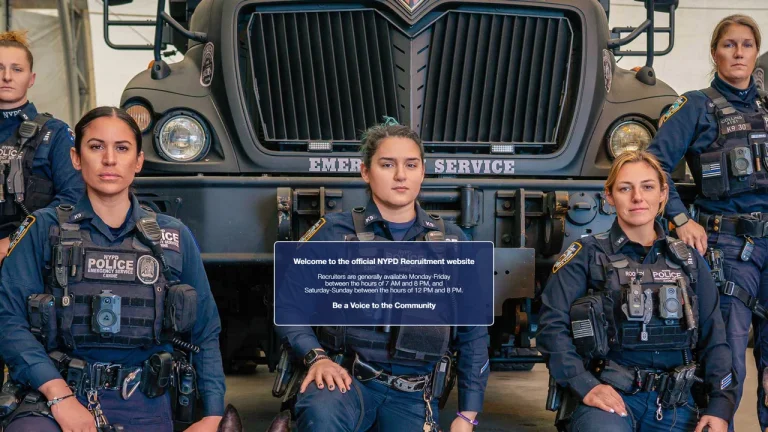
Port Authority Police Command - Port Authority Bus Terminal - New York, NY



New York City Police Department - Headquarters - New York, NY

New York City Police Department - 5th Precinct - New York, NY

New York City Police Department - 13th Precinct - New York, NY
New York City Police Department - 30th Precinct - New York, NY
New York City Police Department - 73rd Precinct - Brooklyn, NY


NYPD Certificate of Conduct & Non-Criminal Fingerprint Section - New York, NY

County Sheriff and Municipal Police Authority in New York
Law enforcement across New York State is structured through a division between elected county sheriffs and municipal police departments. In the 57 counties outside New York City, County Sheriffs are constitutional officers elected by voters to deliver comprehensive criminal law enforcement, manage county correctional facilities, provide courthouse security for the New York State Unified Court System, and execute civil judicial mandates under the Civil Practice Law and Rules (CPLR). Prominent county agencies include the Erie County Sheriff's Office, Monroe County Sheriff's Office, and Onondaga County Sheriff's Office.
Conversely, municipal police departments are established by cities, towns, and incorporated villages to maintain local public safety, conduct criminal investigations, and execute traffic enforcement. These municipal entities include the New York City Police Department (NYPD)-the largest municipal law enforcement agency in the state-as well as major municipal forces in Buffalo, Rochester, Syracuse, Yonkers, and Albany. In Nassau and Suffolk counties on Long Island, primary local patrol is delivered by dedicated county police departments rather than sheriff patrol units.
In New York City, the Office of the Sheriff of the City of New York operates as a specialized civil law enforcement division under the New York City Department of Finance, distinct from the NYPD. The NYC Sheriff is responsible for enforcing civil judgments, executing warrants of eviction from the NYC Housing Court, executing civil arrests, and conducting revenue investigations across all five boroughs.
Law Enforcement Services, Prerequisites, and Standard Timelines
| Service / Matter | Required Documents / Prerequisites | Statutory Fee (USD) | Processing Timeline |
|---|---|---|---|
| FOIL Police Records / Incident Report Request | Written FOIL request, incident date, location, complaint number, photo ID | $0.25 per page (or actual reproduction cost) | 5 business days for initial acknowledgement |
| Civil Judgment Execution (Sheriff Poundage) | Certified transcript of judgment, execution document, creditor instructions | $40.00 - $100.00 mileage/service fee plus statutory poundage | 10 - 30 business days to serve garnishee |
| Pistol / Concealed Carry Licensing (CCIA) | NYS application, 16-hour training certificate, character references, background check | $10.00 - $340.00 (Varies by county licensing officer) | Up to 6 months statutory review window |
| Execution of Eviction Warrant (Sheriff / Marshal) | Signed judicial warrant of eviction, notice of eviction form, court index number | $70.00 - $125.00 statutory service fee | 14-day statutory notice period prior to lockout |
Critical Legal Deadlines & Statutes in New York
Citizens and practitioners interacting with New York law enforcement agencies must observe statutory deadlines. Under the New York Freedom of Information Law (FOIL), police and sheriff departments must acknowledge a written request for records within five business days under N.Y. Pub. Off. Law § 89(3). If access is denied, an administrative appeal must be submitted within thirty calendar days, and the agency has ten business days to explain the denial or grant access.
When asserting a tort or civil rights claim against a municipal police department or county sheriff's office for false arrest, excessive force, or property damage, a formal sworn Notice of Claim must be served upon the municipal entity within ninety calendar days of the occurrence pursuant to N.Y. Gen. Mun. Law § 50-e. A civil action must then be commenced within one year and ninety days under N.Y. Gen. Mun. Law § 50-i. However, when initiating an action against a county sheriff individually for acts done in an official capacity, a strict one-year statute of limitations applies under N.Y. C.P.L.R. § 215(1). Pistol permit applications processed through county licensing officers are governed by N.Y. Penal Law § 400.00, which establishes a six-month statutory review window.
Direct Agency Interaction vs. Retaining Legal Counsel
Citizens can handle routine interactions with local police and sheriff departments without legal counsel. Submitting a non-emergency police report, requesting a copy of an automobile accident report (Form MV-104A), filing public records requests under FOIL, and delivering civil execution packets to the county sheriff's civil division are standard public administrative procedures.
Conversely, legal representation is critical when facing custodial investigations, search warrants, or property seizures. If approached by police detectives for questioning, individuals should assert their right to counsel under the New York State Constitution, which provides an indelible right to counsel that attaches upon attorney retention. In civil matters, executing judgments against evasive debtors under N.Y. C.P.L.R. § 5230 or defending against civil asset forfeiture actions under CPLR Article 13-A requires skilled litigation counsel to navigate complex evidentiary rules in the New York State Supreme Court.
Red Flags & Law Enforcement Impostor Warnings
Members of the public should protect themselves against deceptive operations and predatory schemes related to local law enforcement:
- Impostor telephone calls from individuals claiming to be county sheriff deputies or police officers demanding immediate payment for missed jury service or outstanding warrants via gift cards or wire services.
- Predatory bail runners soliciting families outside county holding facilities or courthouse arraignment areas, charging unlawful financing surcharges above statutory caps.
- Commercial websites charging fees for standard police incident or collision report forms that can be obtained directly from the local precinct or county records division.
- Unlicensed recovery agents claiming authority to execute civil property seizures or evictions without an active warrant issued by a New York state court.
Frequently Asked Questions
What is the difference between a county sheriff and a municipal police department in NY?
A County Sheriff is an elected countywide officer responsible for correctional facilities, civil judgment enforcement under the CPLR, and court security, in addition to road patrol. Municipal police departments are local city, town, or village agencies focused on emergency patrol and criminal investigations within their municipal borders.
What is the deadline for filing a police misconduct claim in New York?
Under N.Y. Gen. Mun. Law § 50-e, a formal sworn Notice of Claim must be served on the municipality within 90 days of the incident. The subsequent lawsuit must be filed within one year and 90 days under N.Y. Gen. Mun. Law § 50-i, or within one year if suing a sheriff individually under N.Y. C.P.L.R. § 215(1).
How does the New York City Sheriff differ from the NYPD?
The NYPD is New York City's primary municipal police department handling 911 dispatch, street patrol, and criminal enforcement. The New York City Sheriff's Office is the civil enforcement division of the NYC Department of Finance, responsible for enforcing money judgments, executing evictions, and enforcing civil court orders across all five boroughs.
How do I obtain a police incident report under New York FOIL?
You must submit a formal written request under the Freedom of Information Law (N.Y. Pub. Off. Law § 87) to the department's designated Records Access Officer. The agency is legally required to respond within five business days by granting access, denying access with written reasons, or providing an estimated completion date.
What is sheriff poundage in New York civil practice?
Under N.Y. C.P.L.R. § 8012, poundage is a statutory percentage fee that a county sheriff or city marshal is legally entitled to collect upon levying or collecting funds under an execution of judgment, typically calculated at 5% of the collected amount.