
Law Enforcement & Corrections in Pennsylvania
Navigating law enforcement and correctional institutions in Pennsylvania requires understanding the distinct roles of municipal police, county sheriffs, and state correctional authorities. From posting bail in county jails to tracking incarcerated individuals within state facilities, adherence to Commonwealth procedures is essential. Explore our directory below to locate state police barracks, county detention centers, and official corrections resources.
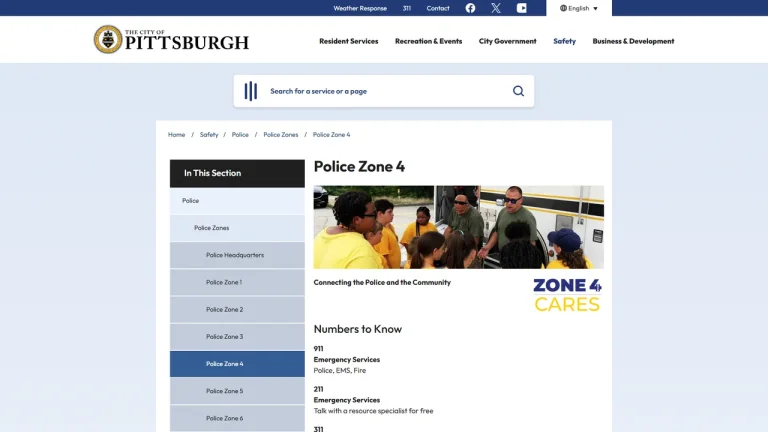
Pittsburgh Police Department Zone 4 Station - Pittsburgh, PA
Philadelphia Office of Emergency Management - Philadelphia, PA


Pittsburgh Bureau of Police: Narcotics and Vice - Pittsburgh, PA


Federal Bureau of Investigation (Pittsburgh Field Office) - Pittsburgh, PA

Statewide Law Enforcement Structure and Correctional Jurisdictions
Law enforcement and correctional administration across the Commonwealth of Pennsylvania operate under a multi-tiered jurisdictional framework dividing authority among state departments, county sheriff offices, and municipal police forces. The primary statewide law enforcement agency is the Pennsylvania State Police (PSP), headquartered in Harrisburg. Organized into sixteen regional Troops commanding scores of local stations, the State Police provide primary patrol services to hundreds of municipalities lacking local departments and maintain exclusive patrol jurisdiction over state highways and expressways.
In incorporated municipalities, independent municipal police departments enforce local ordinances and the Pennsylvania Crimes Code within their respective municipal boundaries. Complementing local police, each of Pennsylvania's sixty-seven counties maintains an elected Sheriff's Office. County sheriffs manage courtroom security across the Courts of Common Pleas, execute bench warrants, transport incarcerated individuals between correctional facilities and judicial courtrooms, and process applications for Pennsylvania Licenses to Carry Firearms (LTCF).
Corrections within Pennsylvania follow a strict statutory division based on sentence duration. County prisons and jails, operated under the supervision of county prison boards or municipal departments, house individuals awaiting trial or serving sentences of less than two years. In contrast, individuals sentenced to maximum terms of two years or greater fall under the jurisdiction of the Pennsylvania Department of Corrections (PADOC), which operates over twenty State Correctional Institutions (SCIs) and works with the Pennsylvania Parole Board.
Pennsylvania Law Enforcement and Corrections Service Schedules
| Service / Matter | Required Documents / Prerequisites | Statutory Fee (USD) | Processing Timeline |
|---|---|---|---|
| PSP PATCH Criminal Background Check | Full legal name, date of birth, Social Security number | $22.00 statutory fee | Immediate online / 2 to 3 weeks mail |
| County Jail Inmate Bail Posting | Valid photo ID, docket number, certified funds or cash | Varies (statutory administrative fees apply) | 2 to 6 hours after receipt |
| PADOC Inmate Visitation Privilege Application | Completed DC-16 visitor form, government photo ID | $0.00 application fee | 14 to 30 business days |
| Pennsylvania License to Carry Firearms (LTCF) | State application, two non-family references, driver's license | $20.00 statutory fee | Up to 45 calendar days |
Critical Law Enforcement Deadlines & Statutes in Pennsylvania
Criminal justice proceedings and corrections management in Pennsylvania are governed by strict statutory timetables codified across the Pennsylvania Crimes Code and Rules of Criminal Procedure. Under the Pennsylvania Criminal History Record Information Act, codified at 18 Pa. C.S. § 9101, strict parameters govern the dissemination of criminal background files through the automated PATCH system, safeguarding protected investigative files from unlawful disclosure.
To promote community reintegration, Pennsylvania's Clean Slate legislation under 18 Pa. C.S. § 9122.1 provides for the automated statutory sealing of eligible non-violent misdemeanor records after a defendant maintains a clean record for ten years. For incarcerated individuals challenging criminal judgments, the Pennsylvania Post Conviction Relief Act (PCRA) establishes an unyielding jurisdictional deadline under 42 Pa. C.S. § 9545, requiring any petition for collateral relief to be filed within one year of the date the judgment of sentence becomes final.
In pretrial settings, prompt arraignment and preliminary hearing rules under Pa. R. Crim. P. 540 mandate that incarcerated defendants receive a preliminary hearing within fourteen days of preliminary arraignment unless continued for cause. Furthermore, within PADOC state facilities, administrative inmate grievances must comply with PADOC Policy DC-ADM 804, which requires formal grievances to be filed within fifteen working days of the underlying incident.
Direct Agency Access vs. Legal Counsel
Citizens regularly interact directly with Pennsylvania law enforcement and corrections agencies for routine administrative matters. Members of the public can independently verify an inmate's custody status using the PADOC Inmate Locator tool, submit visitor applications, deposit commissary funds, request individual background clearances via the online PATCH portal, or apply for a concealed carry license through their local county sheriff.
In contrast, when an individual is arrested, faces custodial interrogation, or is subjected to parole revocation, legal representation is indispensable. Retaining a criminal defense attorney is critical for arguing bail reduction motions before Magisterial District Judges or the Court of Common Pleas, litigating preliminary hearings, and preserving constitutional rights against unlawful searches. Furthermore, addressing probation violations at Gagnon I and Gagnon II hearings or litigating habeas corpus petitions requires formal advocacy to prevent wrongful incarceration.
Red Flags in Bail and Inmate Communication Services
- Beware of unauthorized bail bond agents demanding non-refundable cash fees that exceed standard statutory limits or offering unregulated financing outside Pennsylvania Insurance Department oversight.
- Avoid phone scams where callers falsely pose as county deputy sheriffs demanding immediate electronic payment or gift cards to cancel an outstanding bench warrant.
- Do not rely on third-party commercial services claiming they can accelerate state parole board review or guarantee release from a State Correctional Institution for a fee.
- Ensure inmate administrative grievances within county or state facilities strictly observe the fifteen-working-day filing limit to prevent procedural default of future legal claims.
Frequently Asked Questions
How can I locate someone incarcerated in Pennsylvania?
For individuals serving sentences in state prisons, use the PADOC Online Inmate Locator maintained by the Department of Corrections. For individuals in pretrial custody or serving short sentences, check the inmate lookup tool of the specific county jail.
What is the difference between a county jail and a state correctional institution?
County jails house individuals awaiting trial or those sentenced to maximum terms of less than two years. State Correctional Institutions (SCIs), managed by the Pennsylvania Department of Corrections, house individuals serving sentences of two or more years.
How does Pennsylvania Clean Slate law clear criminal records?
Pennsylvania Clean Slate law automatically seals qualifying non-violent summary offenses and second- and third-degree misdemeanor convictions after ten years, provided the individual remains conviction-free and has paid all court-ordered financial obligations.
What occurs during a Pennsylvania Gagnon hearing?
Gagnon hearings address alleged probation or parole violations. A Gagnon I hearing determines whether probable cause exists that a violation occurred, while a Gagnon II hearing determines whether probation should be formally revoked and a new sentence imposed.
Where can I apply for a Pennsylvania License to Carry Firearms?
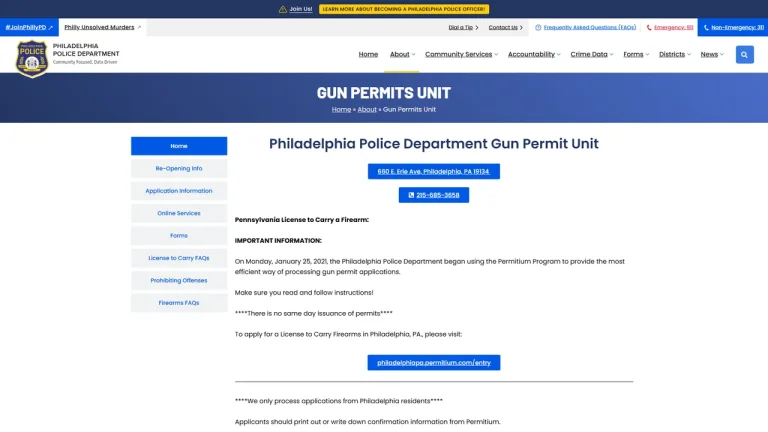
In sixty-six Pennsylvania counties, applications for a License to Carry Firearms (LTCF) are processed by the county Sheriff's Office. In Philadelphia, applications are processed by the Philadelphia Police Department Firearms Investigation Unit.