
Police & Sheriff Departments in Pennsylvania
Navigating local law enforcement and county sheriff offices in Pennsylvania requires understanding their distinct municipal, judicial, and administrative jurisdictions. Our statewide directory connects you with municipal police headquarters, county sheriff divisions, civil process units, and firearms licensing offices across all 67 counties. Explore our verified listings below to locate department contacts, incident report protocols, and public hours.

Pittsburgh Bureau of Police - Missing Persons Unit - Pittsburgh, PA

Philadelphia Sheriff's Office - Criminal Division - Philadelphia, PA
Philadelphia Police Neighborhood Services Unit - Philadelphia, PA
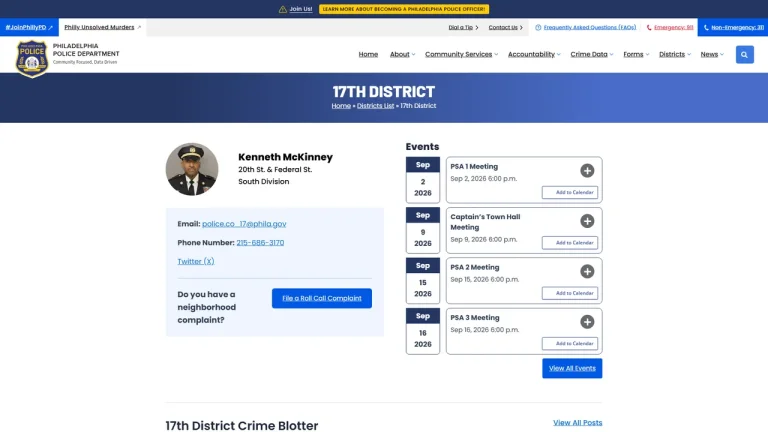
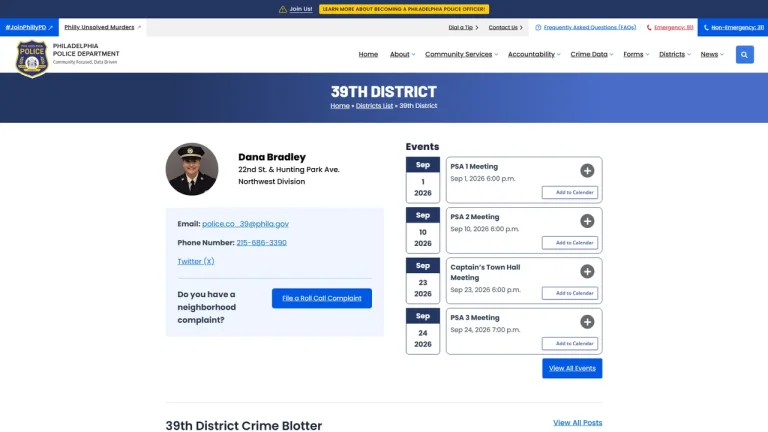
Philadelphia Police 39th District - Philadelphia, PA

Pittsburgh Police Records and Support Services - Pittsburgh, PA

Pittsburgh Police - Central Records and Reporting Unit (CRRU) - Pittsburgh, PA
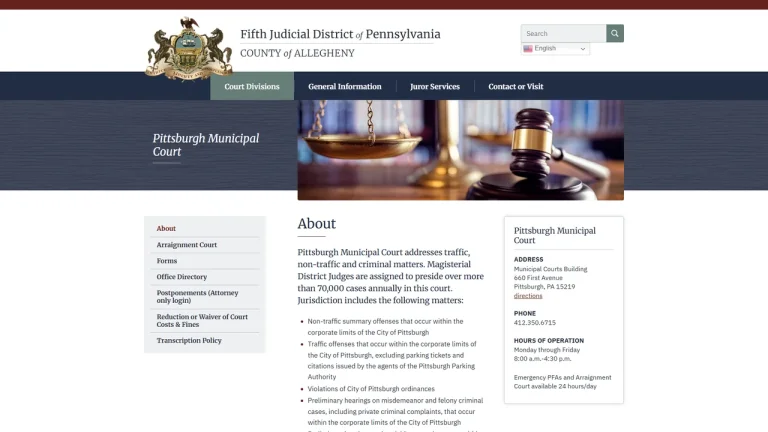
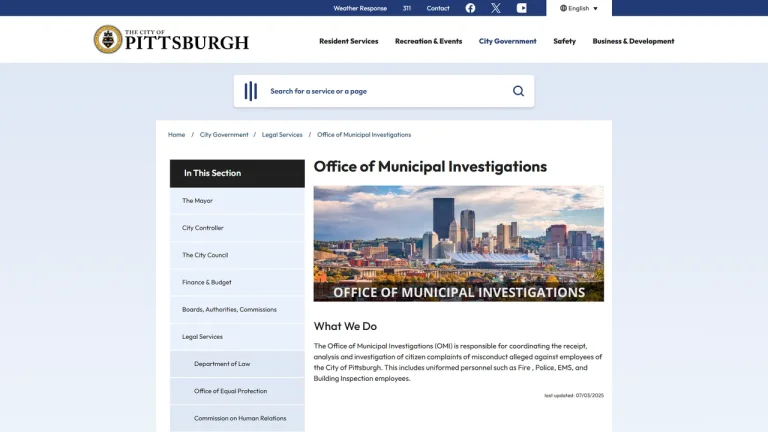
Pittsburgh Office of Municipal Investigations - Pittsburgh, PA

Pittsburgh Bureau of Police: Narcotics and Vice - Pittsburgh, PA
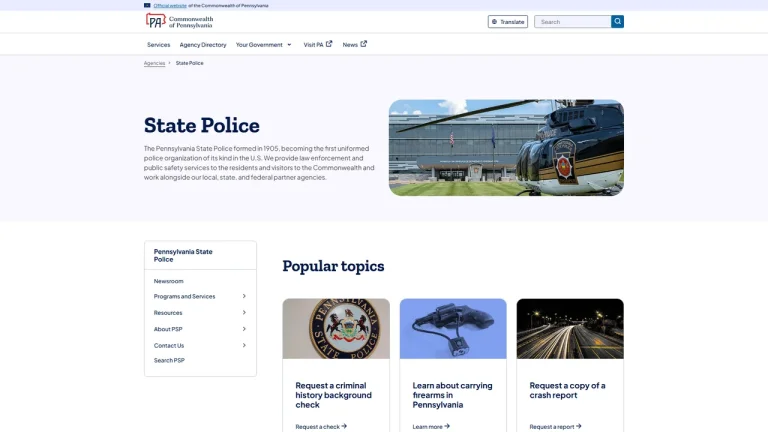
Jurisdictional Authority of Pennsylvania Police & Sheriff Departments
In the Commonwealth of Pennsylvania, local law enforcement authority is divided between municipal police departments and county sheriff offices. Municipal police departments-established within cities, boroughs, and townships such as Philadelphia, Pittsburgh, Allentown, Erie, and Reading-function as primary first responders. These departments conduct criminal investigations, handle emergency 911 dispatch calls, manage routine traffic enforcement, and uphold municipal ordinances and the Pennsylvania Crimes Code.
Conversely, Pennsylvania County Sheriffs are constitutional officers elected across the Commonwealth's 67 counties whose duties focus on judicial administration and court security. Operating within county seats, Sheriff Offices maintain order inside the Courts of Common Pleas, manage the secure transportation of incarcerated defendants, execute bench warrants, and enforce civil judicial orders, including eviction lockouts, personal property levies, and real estate mortgage foreclosure sales.
Additionally, under Pennsylvania statutory law, the County Sheriff serves as the primary issuing authority for Concealed Carry Firearms licenses in 66 counties, with that duty assigned to the Police Commissioner within Philadelphia. Recognizing these jurisdictional boundaries ensures that citizens, businesses, and legal professionals approach the correct law enforcement agency when seeking crash reports, filing civil process, or clearing outstanding warrants.
Key Police & Sheriff Department Services, Permits and Statutory Fees
| Service / Matter | Required Documents / Prerequisites | Statutory Fee (USD) | Processing Timeline |
|---|---|---|---|
| Pennsylvania License to Carry Firearms (LTCF) | State application, government photo ID, two non-family references, background check | $20 statutory application fee | Up to 45 calendar days statutory review window |
| Sheriff Civil Process Service (Writs & Summons) | Original writ from county prothonotary, service instructions, defendant location | $50 - $160 (statutory fee plus county mileage) | 5 - 15 business days based on service priority |
| Municipal Police Incident / Crash Report | Formal request under CHRIA or RTKL, date/time/location details, photo ID | $15 - $22 statutory report fee | 5 - 10 business days following report approval |
| Sheriff Real Estate Foreclosure Sale Registration | Certified deposit funds (typically 10 - 20%), bidder registration documents | Variable statutory poundage and deed recording costs | Scheduled during recurring monthly county auctions |
Critical Legal Deadlines & Statutes in Pennsylvania
Pennsylvania statutes establish clear procedural parameters for police operations, public records access, and civil enforcement. Under 18 Pa. C.S. § 6109, a County Sheriff or municipal police commissioner has up to 45 calendar days to conduct an investigation and render a determination on an application for a License to Carry Firearms (LTCF). An adverse denial or revocation must be appealed to the local county Court of Common Pleas within 30 days under 42 Pa. C.S. § 5571.
Public access to police records is governed by the Criminal History Record Information Act (CHRIA), codified at 18 Pa. C.S. § 9106, and the Pennsylvania Right-to-Know Law under 65 P.S. § 67.708, which protects active investigative records from public disclosure while preserving access to standard motor vehicle collision reports. Municipal police jurisdiction standards across county and city boundaries are regulated pursuant to 42 Pa. C.S. § 8953.
In civil execution proceedings, the County Sheriff operates under strict court rules. Under Pa. R. Civ. P. 3129.2, written notice of a Sheriff sale of real property must be formally served at least 30 days prior to the scheduled sale date. Anyone seeking to challenge tortious actions by municipal police or sheriff officers must provide written notice of the claim within 6 months under 42 Pa. C.S. § 5522, in accordance with the Political Subdivision Tort Claims Act under 42 Pa. C.S. § 8542.
Direct Administrative Access vs. Retaining Legal Counsel
Citizens regularly interact directly with local police departments and county sheriff offices for routine public services. Requesting standard collision reports for insurance claims, applying for an LTCF permit at the county courthouse, registering residential security alarms, and requesting routine property checks are handled directly through agency clerk windows without an attorney.
However, when law enforcement interactions involve potential criminal liability, property seizure, or court orders, retaining a qualified Pennsylvania defense or civil attorney is essential. Individuals subject to an active arrest or bench warrant risk immediate incarceration if they attempt unrepresented surrender at a police station or sheriff division. An attorney arranges formal surrender procedures, files for bail reviews in the Court of Common Pleas, petitions for emergency stays of Sheriff sales under Pa. R. Civ. P. 3121, and ensures your constitutional rights are upheld during investigations.
Red Flags & Law Enforcement Resource Protections
- Fraudulent Warrant Phone Solicitations: Be alert to telephone scams where callers impersonate deputy sheriffs demanding immediate electronic payment or gift cards to resolve fictitious warrants. Pennsylvania sheriff offices never resolve warrants over the telephone.
- Unauthorized Process Serving Operations: Under the Pennsylvania Rules of Civil Procedure, original service of process in the Courts of Common Pleas must generally be performed by the County Sheriff, not private process servers, unless specifically authorized by local court rules.
- Inflated Online Concealed Carry Portals: Avoid unofficial commercial websites charging $50 to $100 for firearms application processing. Legitimate Pennsylvania LTCF permits cost exactly $20 directly through your County Sheriff Office.
- Foreclosure Rescue Scams Prior to Sheriff Sale: Distressed homeowners facing scheduled Sheriff mortgage foreclosure auctions should avoid third-party consultants promising guaranteed sale cancellations without formal legal representation.
Frequently Asked Questions
What is the difference between a municipal police department and a county sheriff in Pennsylvania?
Municipal police departments handle primary emergency response, criminal investigations, and traffic enforcement within their city, township, or borough. County sheriff offices primarily manage courthouse security, prisoner transports, bench warrant execution, civil court process, and firearms license administration across the county.
How do I apply for a License to Carry Firearms (LTCF) in Pennsylvania?
Applications are submitted to the County Sheriff Office in your county of residence (or the Philadelphia Police Department Firearms Identification Unit for Philadelphia residents). Applicants must provide completed application forms, government photo identification, two references, and the statutory $20 fee.
How do I obtain a copy of a police accident report in Pennsylvania?
Accident reports can be requested directly from the records division of the municipal police department that investigated the collision, typically in person, by mail, or through state electronic crash databases, accompanied by the statutory processing fee.
What happens during a Pennsylvania Sheriff mortgage foreclosure sale?
Following a judgment in mortgage foreclosure in the Court of Common Pleas, the County Sheriff conducts a public auction of the property pursuant to Pa. R. Civ. P. 3129. The winning bidder must supply required certified funds, after which the Sheriff issues a deed conveying title to the property.
What should I do if I discover an outstanding bench warrant in Pennsylvania?
If you have an outstanding warrant, consult a licensed Pennsylvania criminal defense attorney immediately. An attorney can review the underlying case, file a motion to lift or quash the warrant, and coordinate a controlled courtroom surrender before a judge to minimize the likelihood of prolonged incarceration.