
County & City Agencies in Vermont
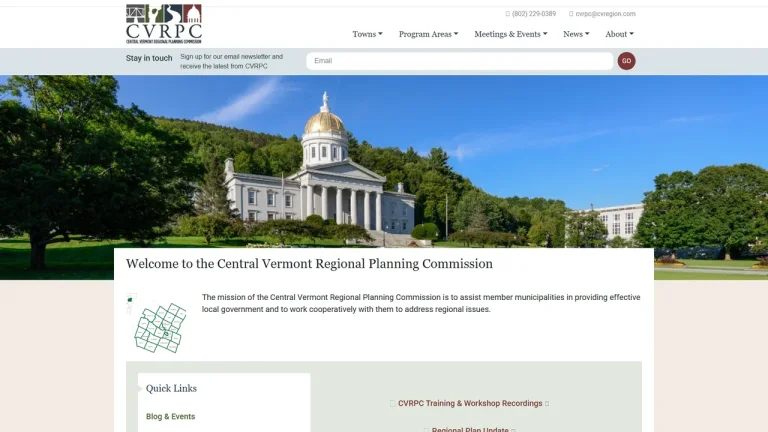
Accessing local government in Vermont requires understanding the critical division between municipal town governance and county judicial administrative functions. Town clerks, selectboards, and county sheriffs manage land evidence, municipal zoning, and local civil process across Vermont communities. Explore our verified directory below to connect with Vermont town offices, city halls, county sheriff departments, and municipal boards.


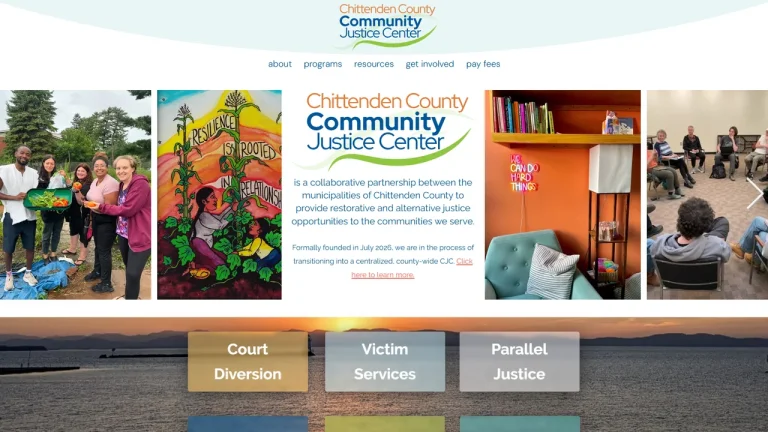

Vermont Department for Children and Families (Economic Services Division) - Burlington, VT


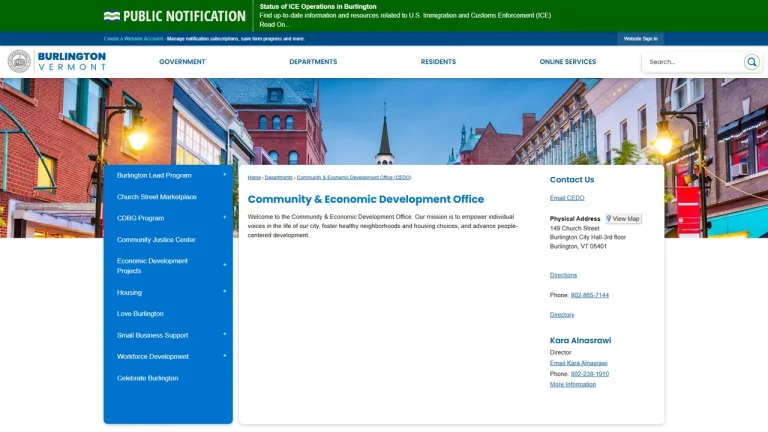
Community and Economic Development Office (CEDO) - Burlington, VT


Green Mountain Transit (GMT) - Administrative Headquarters - Burlington, VT
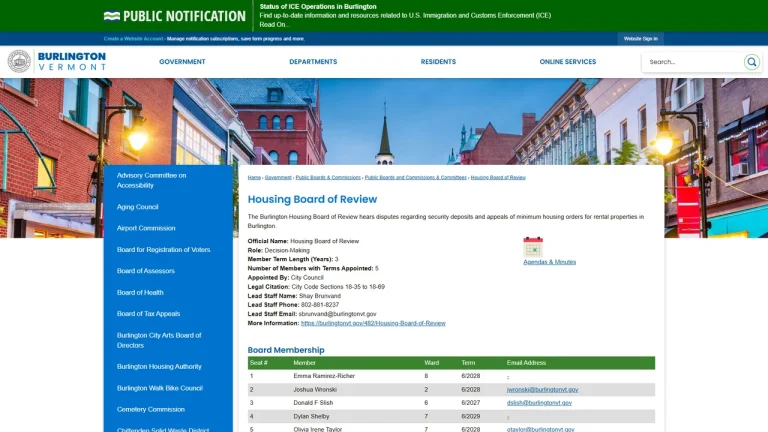
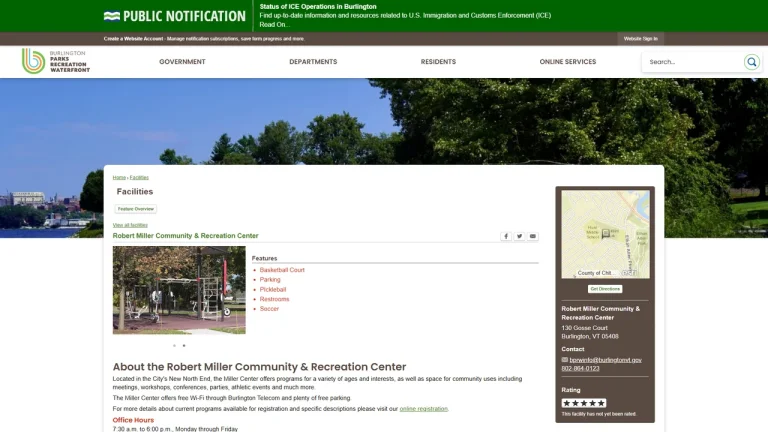
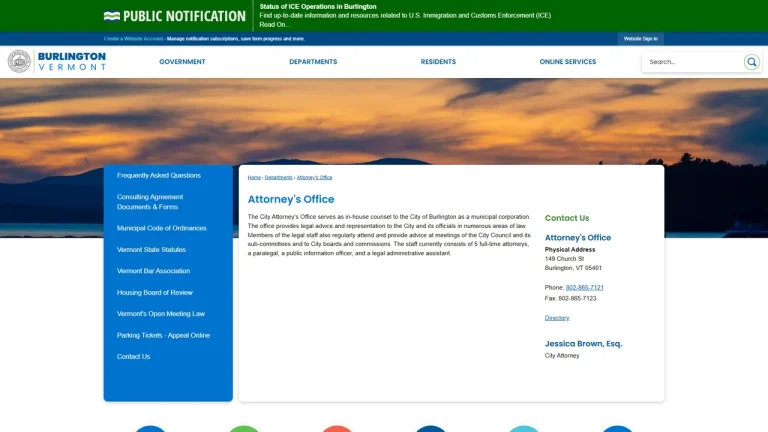
Office of the City Attorney and Corporation Counsel - Burlington, VT

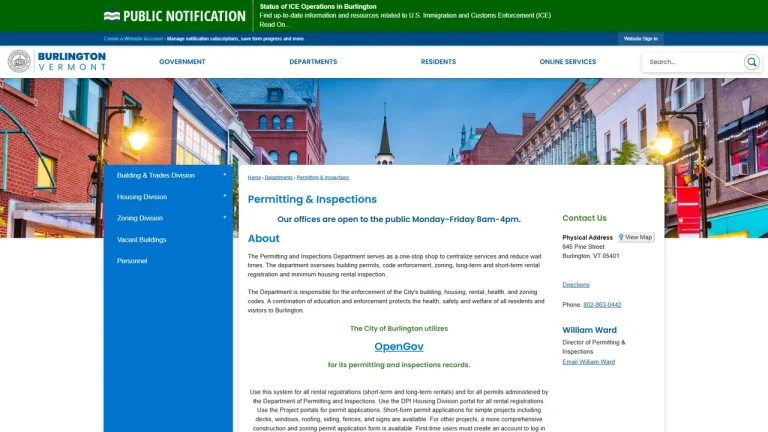
Burlington Department of Permitting and Inspections - Burlington, VT
The Framework of Municipal Towns and County Offices in Vermont
Local governance in Vermont is structured primarily around 242 towns and 9 incorporated cities across fourteen counties. Unlike jurisdictions with extensive county administrations, Vermont counties function primarily as geographic units for judicial administration, courthouse maintenance, and county sheriff operations.
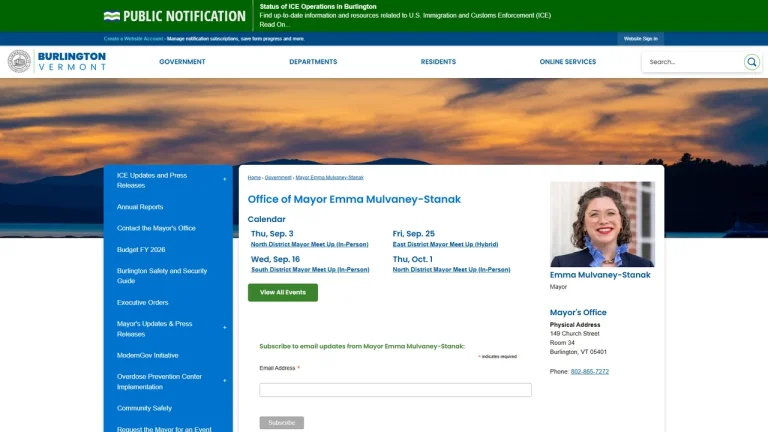
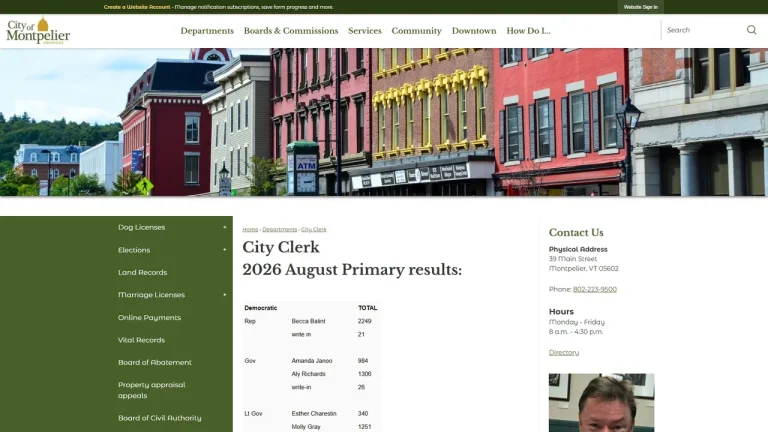
The center of local civic life is the municipal Town Clerk and the elected Selectboard (or City Council and Mayor in cities like Burlington, South Burlington, and Rutland). Town clerks maintain legal custody of land records, deeds, mortgages, vital statistics, and local voter registries, while Selectboards manage local roadways, approve municipal budgets, and enact town ordinances.
At the county level, constitutional officers include two elected Assistant Judges (traditionally designated as Side Judges), who participate in certain Superior Court matters and administer the county courthouse budget, along with the County Treasurer and the elected County Sheriff. The Sheriff Department executes civil process, provides courtroom security, and conducts contracted police patrols for towns that do not operate municipal police departments.
Common Vermont Municipal and County Services, Fees, and Timelines
| Service / Matter | Required Documents / Prerequisites | Statutory Fee (USD) | Processing Timeline |
|---|---|---|---|
| Real Property Deed Recording (Town Clerk) | Original executed deed, Vermont Property Transfer Tax Return (PTTR), notary seal | $15 per page statutory recording fee under 32 V.S.A. § 1671 | Immediate across counter or 24 to 48 business hours |
| Certified Vital Record Copy (Town Clerk) | Completed state application form, valid government photo ID, proof of direct interest | $10 statutory certified copy fee under 32 V.S.A. § 1715 | Same day in person; 2 to 5 business days by mail |
| Municipal Zoning / Development Permit | DRB application form, project site plans, dimensional compliance documentation | $50 to $500 depending on municipal fee ordinance | 30 to 45 days for Development Review Board review |
| Sheriff Civil Process Service | Original summons and complaint, service instructions, return of service form | Statutory sheriff fee ($40 to $75 plus mileage) | Process served within 3 to 14 business days |
Critical Legal Deadlines & Statutes in Vermont
Engaging with local government bodies in Vermont requires strict adherence to statutory filing schedules. In local land use matters, appealing an administrative zoning officer decision to the municipal Development Review Board (DRB) must be accomplished within 15 days under 24 V.S.A. § 4465. If the DRB issues an adverse decision, an appeal to the Vermont Superior Court, Environmental Division, must be filed within 30 days pursuant to 24 V.S.A. § 4471 and Vermont Rule for Environmental Court Proceedings 5.
Property tax assessment challenges follow an unforgiving annual timetable. Under 32 V.S.A. § 4111, taxpayers grieving their property valuation must lodge a written grievance with the town board of listers within 14 days of the notice of change. Appeals from the listers determination to the local Board of Civil Authority (BCA) must be filed within 14 days under 32 V.S.A. § 4221. If the BCA upholds the assessment, the property owner has 30 days to file an appeal with the Vermont Superior Court or the Director of Property Valuation and Review pursuant to 32 V.S.A. § 4461.
Real estate conveyances must be promptly recorded with the Town Clerk where the land is situated under 27 V.S.A. § 341 to establish priority against subsequent buyers. The statutory recording fee is established uniformly across all Vermont towns at $15 per page under 32 V.S.A. § 1671. Municipal records remain subject to inspection under the Vermont Public Records Act, 1 V.S.A. § 318, with a mandatory 3-business-day response window.
Direct Agency Access vs. Legal Counsel
Citizens can handle standard civic transactions directly with town clerks and municipal departments. Recording a warranty deed, ordering certified vital statistics, registering personal property, or participating in open Town Meeting debates can be conducted independently without legal representation.
However, when local disputes involve property rights or regulatory enforcement, retaining experienced legal counsel is essential. Contested proceedings before a municipal Development Review Board or appeals to the Vermont Superior Court, Environmental Division, involve formal land use rules under 24 V.S.A. § 4471. Similarly, litigating tax assessments before the Board of Civil Authority or resolving boundary disputes requires skilled advocacy. While the Vermont Superior Court maintains a Small Claims Division with a $5,000 ceiling under 12 V.S.A. § 5531, small claims courts lack jurisdiction to resolve real estate title or overturn municipal zoning determinations, making representation by a local real estate or municipal attorney vital.
Red Flags & Municipal Service Warnings
- Direct-mail solicitations offering to furnish a certified copy of your town-recorded deed for $85 to $125, when certified copies can be obtained directly from your local Town Clerk for $10 to $15.
- Unlicensed contractors claiming they can bypass municipal building permits or local Development Review Board approvals through personal relationships with town officials.
- Commercial websites advertising online Vermont marriage certificates that are legally invalid without in-person application at an authorized municipal town clerk office.
- Fraudulent phone calls demanding immediate payments for alleged overdue municipal property taxes or water district liens using cryptocurrency or prepaid debit cards.
Frequently Asked Questions
Where are land records and deeds recorded in Vermont?
In Vermont, real estate deeds, mortgages, and land records are recorded exclusively at the municipal level with the Town Clerk in the town where the property is physically situated, rather than at a county courthouse, pursuant to 27 V.S.A. § 341.
What is the statutory fee to record a property deed in Vermont?
Under 32 V.S.A. § 1671, the statutory recording fee across all Vermont town clerk offices is $15 per document page, accompanied by a completed Vermont Property Transfer Tax Return.
What are Assistant Judges or Side Judges in Vermont county government?
Assistant Judges, also known as Side Judges, are elected county constitutional officers who administer county budgets, oversee the county courthouse and sheriff department, and sit alongside presiding judges in certain Superior Court proceedings.
How do I appeal a municipal zoning decision in Vermont?
Under 24 V.S.A. § 4465, an administrative zoning officer decision must be appealed to the local Development Review Board within 15 days, and an adverse DRB decision must be appealed to the Vermont Superior Court, Environmental Division, within 30 days.
What is the statutory deadline to grieve a property tax assessment in Vermont?
Pursuant to 32 V.S.A. § 4111, taxpayers must submit a written grievance to the town board of listers within 14 days of the postmarked notice of change in property appraisal.