
Federal Agencies in Philadelphia
Federal agency offices in Philadelphia manage vital civil services, workplace investigations, social welfare benefits, and administrative justice throughout Southeastern Pennsylvania. Accessing regional headquarters requires navigating rigid federal application rules, security screenings, and evidentiary standards. Browse our curated registry below to obtain direct office addresses, intake procedures, and operational details.
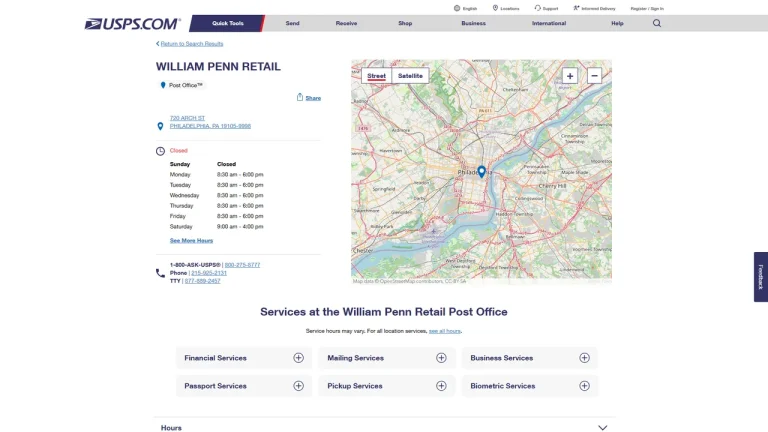
United States Postal Service - William Penn Retail - Philadelphia, PA

U.S. Army Corps of Engineers - Philadelphia District - Philadelphia, PA
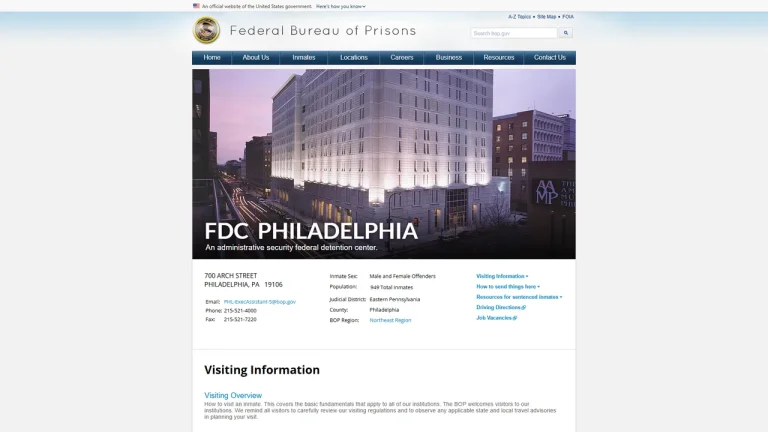
US Small Business Administration - Office of Inspector General - Philadelphia, PA
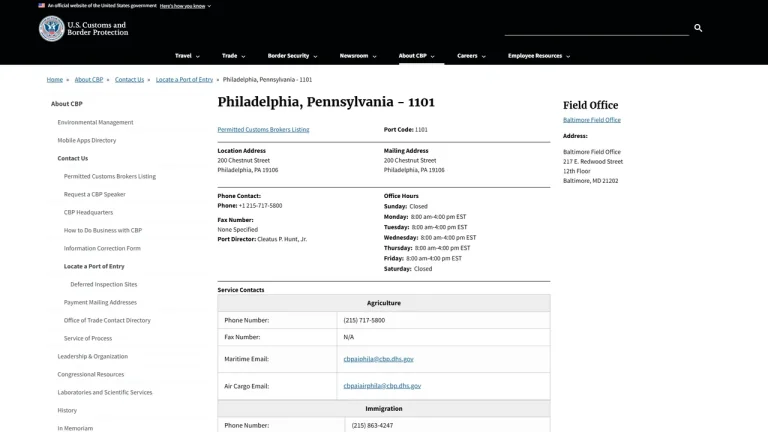
U.S. Customs and Border Protection - Philadelphia Service Port - Philadelphia, PA
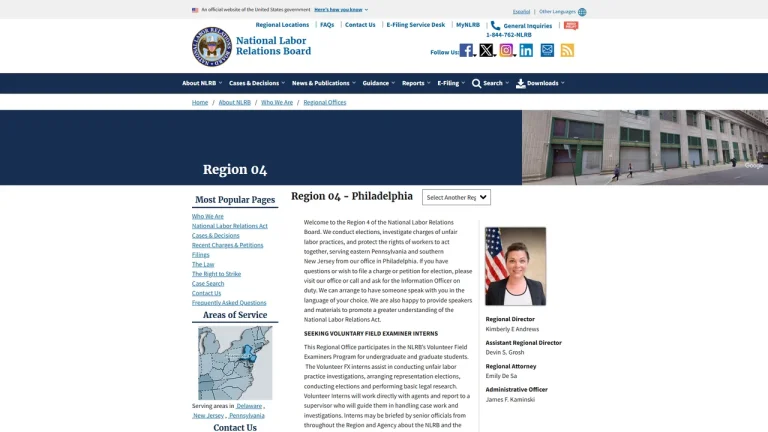
National Labor Relations Board - Region 4 - Philadelphia, PA
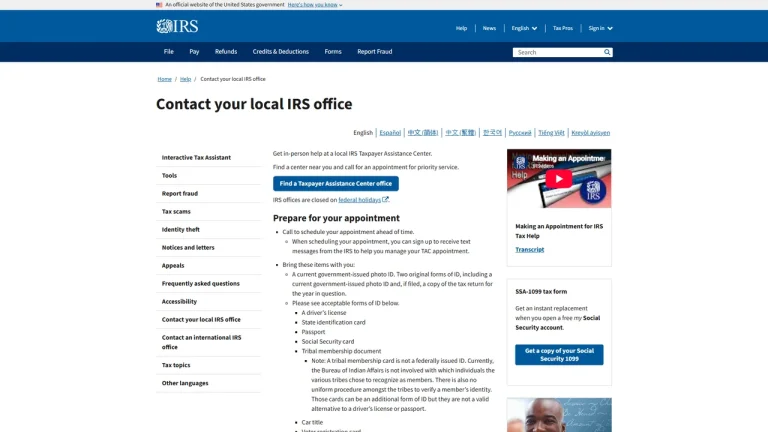
Internal Revenue Service (IRS) Taxpayer Assistance Center - Philadelphia, PA
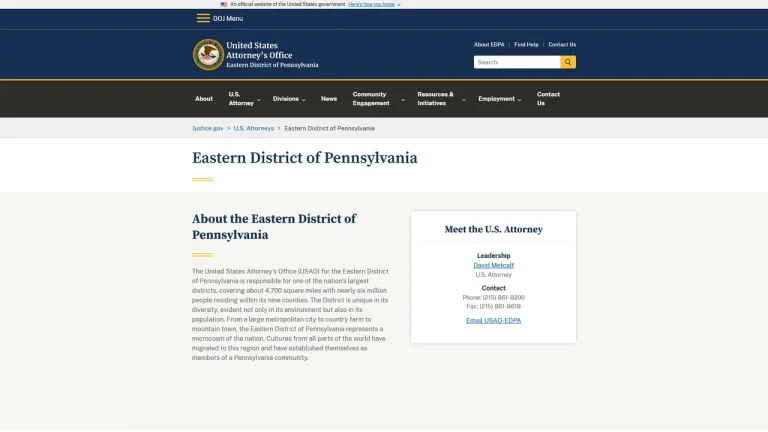
US Department of Justice - U.S. Attorney's Office - Philadelphia, PA

U.S. Department of Labor - Office of Labor-Management Standards - Philadelphia, PA


U.S. Department of State - Diplomatic Security Service - Philadelphia, PA

U.S. Department of Commerce - Economic Development Administration - Philadelphia, PA
Federal Administrative Authority in Philadelphia
Philadelphia serves as the primary federal administrative and judicial hub for Southeastern Pennsylvania and the broader Delaware Valley. Federal executive agencies maintain regional headquarters, district offices, and hearing facilities throughout the city to enforce federal statutes, regulate commerce, administer social welfare programs, and safeguard civil rights. Decisions issued by these regional offices carry binding legal authority across Philadelphia, Bucks, Chester, Delaware, and Montgomery counties.
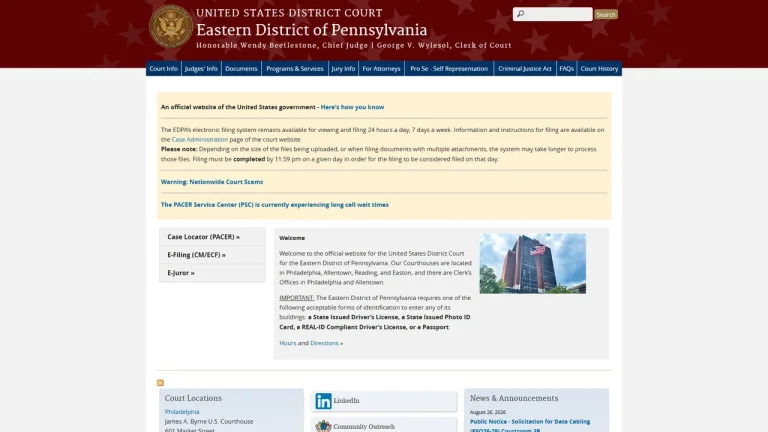
Major federal judicial and regulatory bodies are clustered within historic Center City and University City. The United States District Court for the Eastern District of Pennsylvania sits at the James A. Byrne U.S. Courthouse at 601 Market Street, which also houses the U.S. Court of Appeals for the Third Circuit. Adjacent to the courthouse, the William J. Green Jr. Federal Building at 600 Arch Street accommodates key administrative branches, including the Internal Revenue Service, the Department of Labor, and the Social Security Administration.
Immigration and naturalization matters are administered through the United States Citizenship and Immigration Services (USCIS) Philadelphia Field Office located at 30 North 41st Street. Meanwhile, civil rights enforcement operates through the Equal Employment Opportunity Commission (EEOC) Philadelphia District Office at 801 Market Street. Interacting with these agencies requires compliance with federal administrative law, agency-specific codes, and standardized security protocols.
Common Federal Agency Filings, Statutory Fees, and Timelines
| Service / Matter | Required Documents / Prerequisites | Statutory Fee (USD) | Processing Timeline |
|---|---|---|---|
| EEOC Charge of Discrimination | Form 5 charge document, factual narrative, employment records | $0 (Statutory free filing) | 180 to 300 days investigation |
| USCIS N-400 Naturalization | Form N-400, permanent resident card, biometric verification | $710 to $760 (Statutory filing fee) | 6 to 12 months average |
| Social Security Disability Hearing | Form HA-501, comprehensive medical history, denial notices | $0 (Administrative appeal) | 8 to 14 months to hearing date |
| FOIA Agency Records Request | Written statutory request, government ID, fee category declaration | $0 (Search/copy fees may apply) | 20 business days initial response |
Critical Legal Deadlines & Statutes in Pennsylvania
Administrative actions handled by federal agencies in Philadelphia are governed by unforgiving statutory deadlines. Workers filing employment discrimination claims under Title VII of the Civil Rights Act must submit their verified charge to the EEOC Philadelphia District Office within 300 days of the unlawful practice, pursuant to 42 U.S. Code § 2000e-5, because Pennsylvania maintains its own state fair employment agency.
Parties pursuing tort claims against federal departments operating in Philadelphia must comply with the Federal Tort Claims Act under 28 U.S. Code § 2401. This requires submitting an administrative claim on Standard Form 95 within two years of the incident before any civil lawsuit can be initiated in the Eastern District of Pennsylvania. Following an administrative denial, claimants have precisely six months to file in federal district court under 28 U.S. Code § 2675.
For disability benefit claims before the Social Security Administration, an appeal seeking an Administrative Law Judge (ALJ) hearing must be filed within 60 days of receiving an adverse reconsideration determination, as codified in 20 C.F.R. § 404.933. Agency transparency requests submitted under the Freedom of Information Act carry a mandatory 20-working-day determination window pursuant to 5 U.S. Code § 552.
Direct Administrative Access vs. Federal Legal Representation
Citizens can execute routine administrative transactions with federal agencies independently. Submitting initial disability paperwork, filing basic Freedom of Information Act requests, scheduling appointments at the IRS Taxpayer Assistance Center, or initiating naturalization petitions can often be completed without professional counsel through verified federal web portals.
However, when administrative disputes escalate to formal agency adjudications or federal court litigation, retaining a licensed attorney admitted to the bar of the Eastern District of Pennsylvania or authorized to practice before federal agencies is critical. Evidentiary hearings before an EEOC Administrative Judge, immigration removal defense before the Philadelphia Immigration Court, or appeals under the Administrative Procedure Act codified at 5 U.S. Code § 702 require complex brief drafting, evidentiary depositions, and cross-examination skills.
Red Flags & Consumer Scams Targeting Federal Applicants
- Never utilize non-attorney immigration consultants or unlicensed notarios operating in Philadelphia neighborhoods who claim authority to represent applicants before USCIS or the Executive Office for Immigration Review.
- Avoid commercial websites that charge fees to download standard federal administrative application forms, which are always provided without cost on genuine official government websites.
- Be vigilant against telephone or email solicitations threatening immediate arrest or asset forfeiture on behalf of the IRS or Social Security Administration; federal agencies initiate contact via official mail.
- Do not retain intermediaries claiming exclusive connections or fast-track processing privileges with federal program examiners, as such representations violate federal ethics rules.
Frequently Asked Questions
Where is the federal courthouse located in Philadelphia?
The federal courthouse for the Eastern District of Pennsylvania is the James A. Byrne U.S. Courthouse, located at 601 Market Street, Philadelphia, PA 19106. The building houses federal district courtrooms, federal magistrate chambers, and the Third Circuit Court of Appeals.
How do I check case documents filed in federal courts in Philadelphia?
Federal civil and criminal dockets are accessible electronically through the Public Access to Court Electronic Records (PACER) system and the Case Management/Electronic Case Files (CM/ECF) portal maintained by the federal judiciary.
What is the difference between an EEOC complaint and a PHRC complaint?
The EEOC is a federal agency enforcing federal workplace discrimination statutes, while the Pennsylvania Human Relations Commission (PHRC) enforces state law. Due to a worksharing agreement, filing a charge with one agency can be dual-filed with the other to preserve state and federal statutory rights.
Can I represent myself in federal civil litigation in Philadelphia?
Under federal statute, individual litigants have the right to represent themselves pro se in federal district court. However, corporations and partnerships must appear through counsel, and self-represented parties remain strictly bound by the Federal Rules of Civil Procedure.
What identification is required to enter federal buildings in Philadelphia?
Visitors must present a valid REAL ID-compliant government-issued photo identification, such as a state driver license or U.S. passport. All visitors and personal belongings must clear security checkpoints and magnetometers before entry.